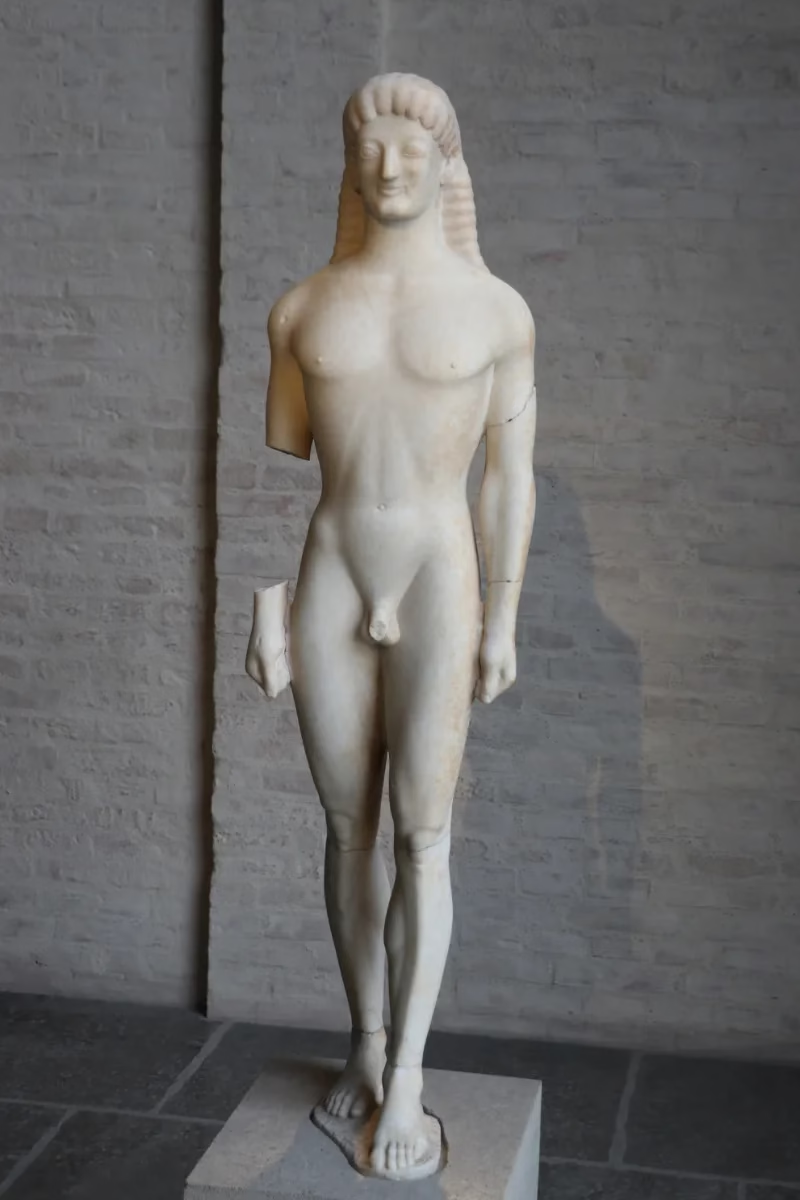
The Kouros of Tenea has been well studied as it is an early marble from a period when most Greek sculptures were still of baked clay. This marble naked youth dates from around 560 BC and was rediscovered in 1846. As it was found in a sacred site and a full nude, it was originally described as the Apollo of Tenea. However, more recent opinion has it as a funerary monument and a depiction of a deceased individual. It is wonderfully well preserved but for a missing right elbow.