The Asian Art Museum in Berlin is one of Europe’s finest collections of Asian art, with Buddhist cave temples, Chinese imperial treasures, Japanese screens, and religious art from across Asia displayed in the Humboldt Forum.
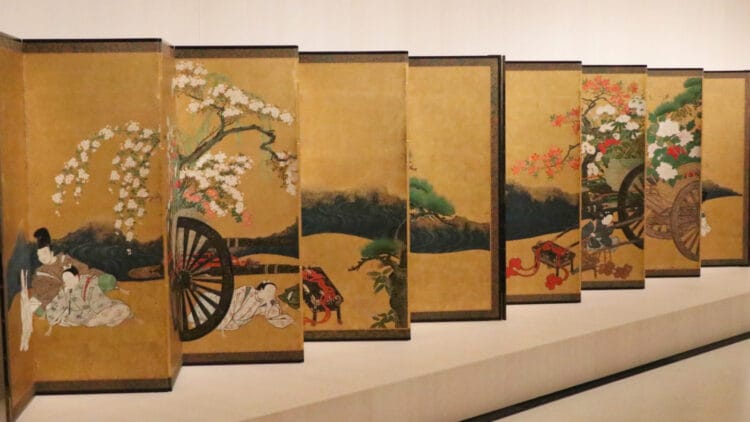
The Museum für Asiatische Kunst (Asian Art Museum) in the Humboldt Forum (Berliner Schloss) displays the world-class art and ethnological collections of the Staatliche Museen zu Berlin. Focal points of the museum are art from Japan, China, and Korea; religious art from the Indo-Asian cultural region; and ethnological items from all Asian regions. Around 20,000 items are in the permanent exhibition — average visitors stay close to 90 minutes in this large museum. Admission to the Asian Art Museum (and the Ethnological Museum) is on a combination ticket and not included in Museum Island Berlin passes.
Asian Art Museum in Berlin: Quick Guide
📍 Location: Humboldt Forum on Museum Island, Berlin
⭐ Don’t Miss:
- Buddhist caves from the Silk Road
- Chinese Imperial Throne
- Japanese tea house and lacquerware
- Religious art from all parts of Asia
⏱ Time Needed:
60 to 90 minutes
🎟 Best Ticket:
Combination ticket with the Ethnological Museum (Museum Island Tickets are not valid!)
📅 Best Time to Visit:
Weekdays at 10:30 or after 15:00
✅ Open on Mondays
⛔ Closed on Tuesday
👨👩👧👦 Good For:
Culture, religion, archaeology, and art from all parts of Asia.
Why Visit? Berlin’s best museum on life, civilizations, and art from Asia, with colorful and extraordinary ethnological items from East Asia, the Indian cultural region, and the Silk Road.
Asian Art Museum in Berlin
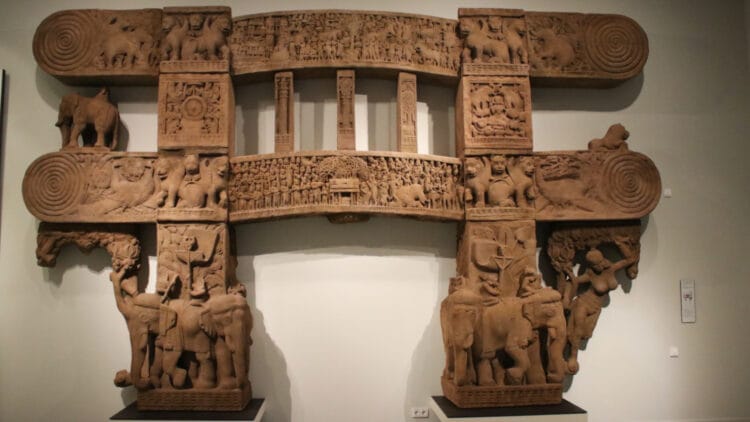
The Asian Art Museum on the third floor of the Humboldt Forum in Berlin exhibits items from the museum’s large and varied collection of items from all parts of Asia. Items range from archaeological artifacts to modern art.
East-Asian Art Collection
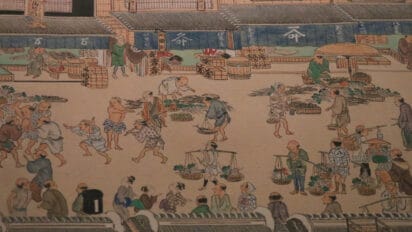
The East-Asian Art Collection covers art from China, Korea, and Japan. Highlights include Japanese paintings and lacquerware, Chinese ceramics from the Neolithic period to the 15th century, folding screens, paintings, woodcut prints, and, of course, calligraphy scrolls.
In 1945, the Soviet Union took 90% of the East Asian Art Collection as looted art with many items still in the Hermitage and Pushkin Museums. Only 300 items in the Berlin museum are from the vast original prewar Ostasiatische Kunstsammung.
Collection of South, Southeast, and Central Asian Art
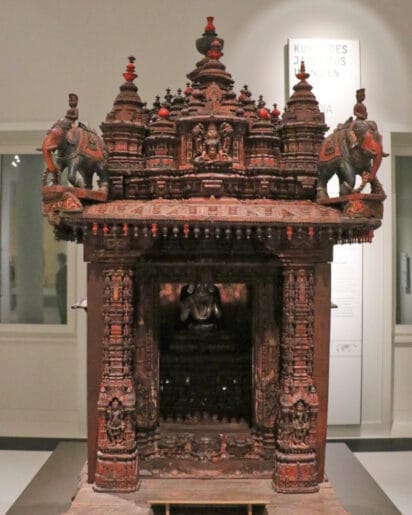
The Collection of South, Southeast, and Central Asian Art includes items from the 4th century BC up to the present day. It is one of the world’s largest and most important repositories of art from the Indo-Asian cultural region. Only around 400 of the 20,000 items are on permanent display.
This vast geographical region encompasses India, Pakistan, Afghanistan, Sri Lanka, Bangladesh, Nepal, the autonomous regions of Tibet and Xinjiang of the People’s Republic of China, the Southeast Asian countries of Myanmar, Thailand, Cambodia, Vietnam, and the Indonesian archipelago.
Religious art, especially Buddhism, Hinduism, and Islam, plays a major role in the collection.
As with the East Asian art collection, many of the Indian art holdings are still in Russian museum storerooms.
Exhibitions in the Asian Art Museum in Berlin
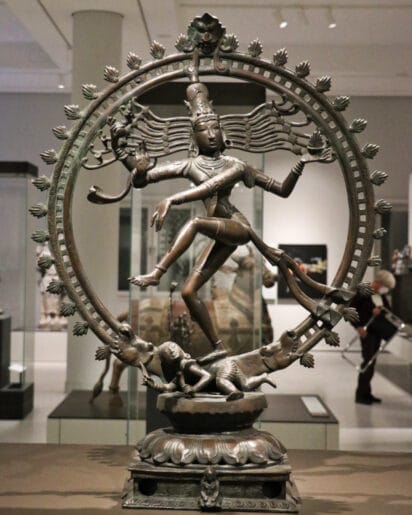
The main themes of the Asian Art Museum are:
- Religious art from South Asia and Southeast Asia — including Hinduism, Buddhism, Jainism, and courtly art. The oldest artworks in the collection originate from Buddhist and Hindu places of worship, dating from the first few centuries of the Common Era. Jain art and Hindu sculptures are mostly from the classical period up to around the 13th century CE.
- Northern Silk Road — The Turfan Collection of murals, paintings, and sculptures from the Northern Silk Route. An absolute highlight is the full-scale reconstruction of a square temple decorated with the original murals from Cave 123 at the oasis of Kucha.
- Art from Japan, including a tatami-mat tea house where tea ceremonies are conducted.
- Art from China and Korea
- China and Europe — especially porcelain produced for the European market. (The best collection of historic porcelain in Germany is the Porzellansammlung in the Zwinger in Dresden.)
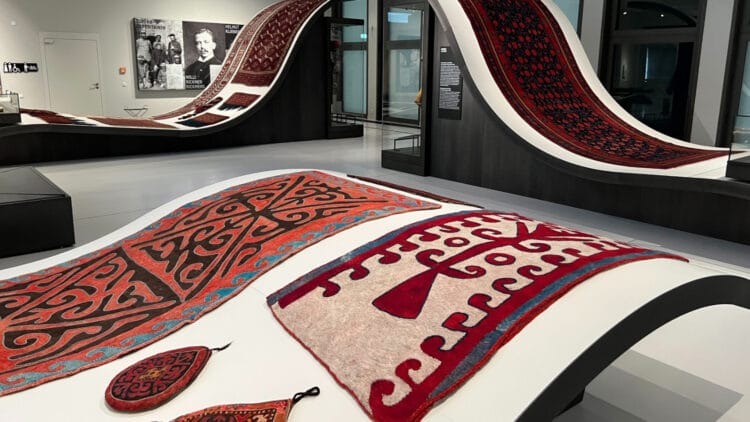
The Asian items from the Ethnological Museum are included in the Asian Art Museum with main themes:
- Crafts from Central Asia — highlights include cloth, carpets, and jewellery.
- Orient and Occident
- Asian Theatre
- Aspects of Islam
See also:
- Islamic Art, especially from the Near East, Africa, and Europe, is covered far more comprehensively in the Museum für Islamische Kunst. It is due to reopen in the Pergamon Museum on 4 June 2027.
- The Ethnological Museum on the second floor of the Humboldt Forum has extensive displays of items from the Americas, Africa, and Oceania. (Admission is included on your museum ticket.)
What to See First in the Asian Art Museum
If You Only Have One Hour:
Top Highlights in the Asian Art Museum
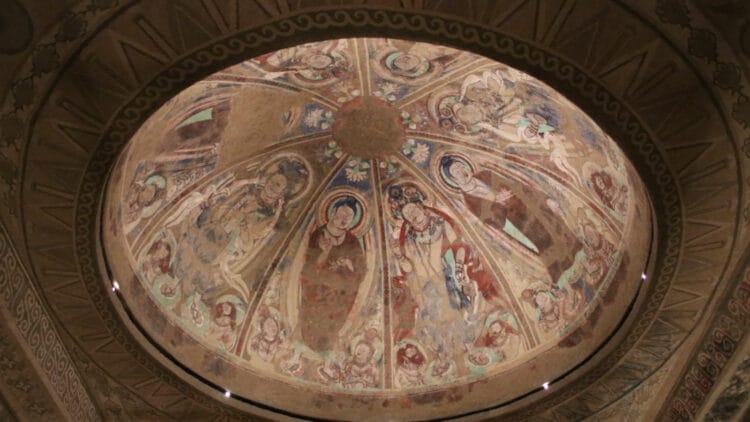
Some of the highlights in the Museum für Asiatische Kunst (Asian Art Museum) include (in no specific order):
Buddhist Cave Temples
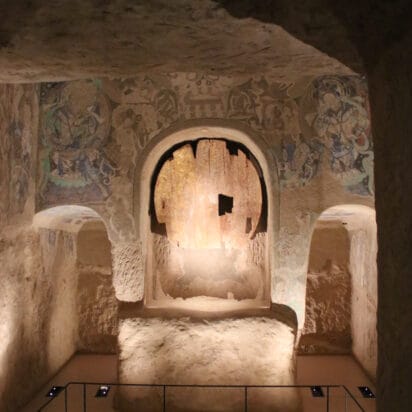
The museum has a famous collection of items collected by the “Turfan Expeditions” in the early 1900s from the Northern Silk Road in what is now part of China. The most impressive items are the wall paintings. Some are placed in two reconstructed Buddhist cave temples, which are accessible for close-up looks.
Kizil Cave 123, known as the “Cave of the Ring-Bearing Doves”, has a square shape and is crowned by a dome, which is unusual. Its ceiling is decorated with stunning paintings of Buddhas and Bodhisattvas. The wall paintings that had been destroyed or that remain in situ in Kizil have been recreated in sand-coloured clay tones. Original fragments can be identified by their brighter colours. Some of the paintings date to the 5th or 6th century CE.
Casts of the Angkor Wat Reliefs
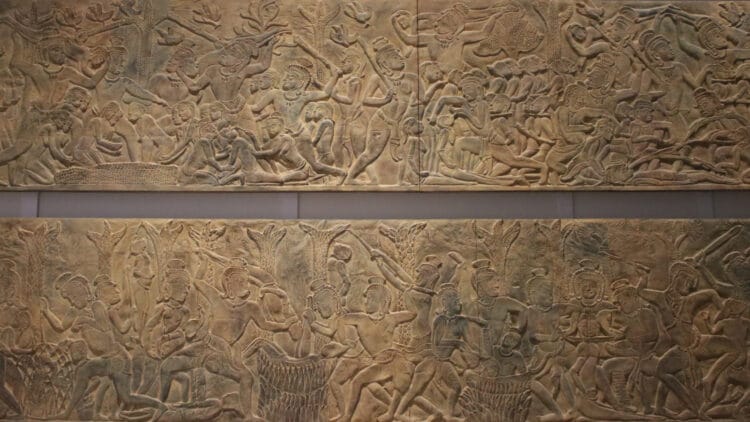
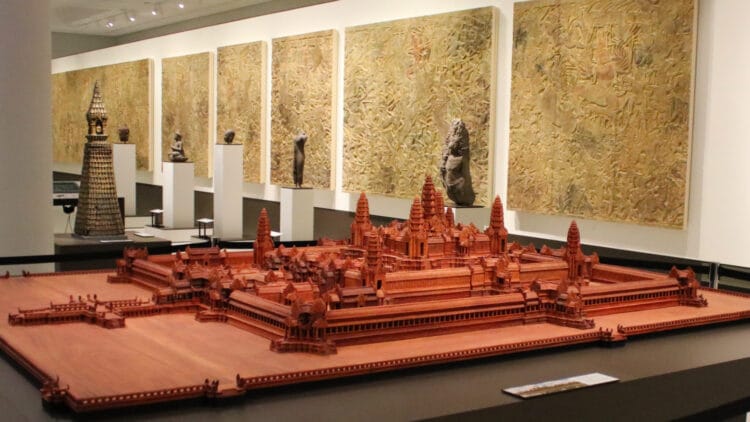
A model of Angkor Wat in reddish-coloured tropical wood, made on a scale of 1:50 by Cambodian craftsmen in 2007, shows the monumental architecture of the original temple complex. However, the more interesting items here are the 23 m (75 ft) long cast of reliefs decorated with battle scenes between gods and demons, a royal parade, and the arrival of deceased souls in heaven or hell.
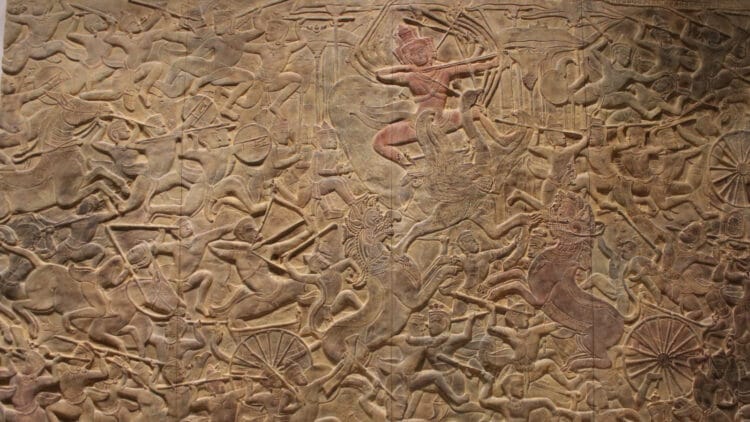
The original 12th-century stone reliefs ran as a continuous two-meter-high band along the interior walls of galleries. The displayed plaster reliefs were cast in the 1980s from paper moulds taken in 1898. (The Berlin museum has moulds for 200 m (656 ft) of the relief band.) The art style is different, but the punishments are quite similar to the Dantesque interpretation of hell in Italian Renaissance art.
Three Worlds Traiphum from Thailand
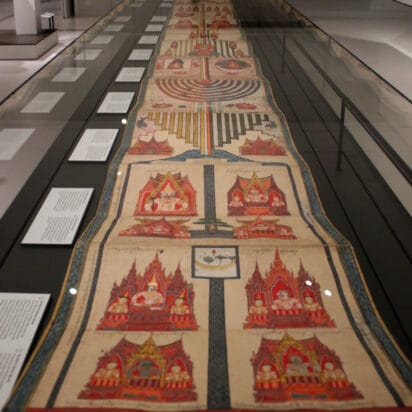
A highlight of Buddhist imagery from Thailand is the illuminated royal Traiphum manuscript, the Book of the Three Worlds, presenting the whole cosmos in a single work. King Taksin commissioned it in 1776 to assert his power after the destruction of the former capital, Ayutthaya.
The 33 m (108 ft) long illustrated manuscript consists of paper painted on both sides with body colours and gold, and is folded like an accordion book.
It represents the three-level Buddhist cosmos, where good or bad deeds determine in which part of the cosmic realm one is reborn. The exhibition shows one 6 m (20 ft) section of the illustrated manuscript at a time, which changes every few months.
Chinese Court Art in Berlin
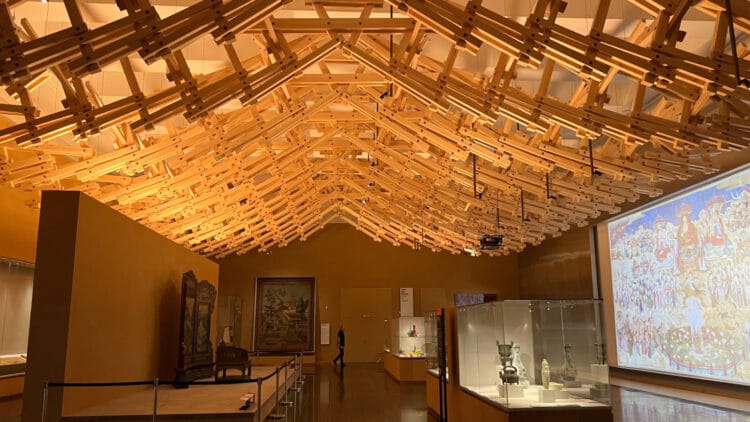
The Throne Room houses Chinese court art. The enormous poplar-wood roof construction based on the Chinese pagoda form consists of 1300 individual parts. The black natural stone floor is surrounded by clay-plastered walls, while a niche set in stainless steel accommodates the large-format mural The Buddha Sermon by the court painter Ding Guangpeng (active 1708 – 1771). The work (543 × 1015 cm (17.8 × 33.3 ft)) is extremely light-sensitive and is presented only a few times a day.
The throne in the centre of the room is the only one in European collections that still stands in front of its original screen. It depicts the Paradise of the Daoist Immortals, so that when the Emperor sat in front of it, he was symbolically accepted into their kingdom. The hugely elaborate inlays of numerous tiny pieces of mother-of-pearl, gold, and silver foil make this imperial ensemble a work of special artistic magnificence.
Japanese Tea House in the Humboldt Forum
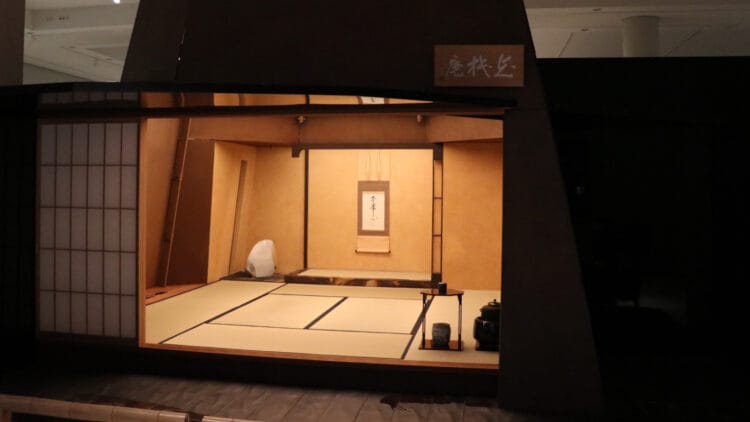
The Japanese Tea House combines tradition and modernity. It is often used for tea ceremonies and other events. The Japanese collection also includes impressive porcelain, woodcuts, lacquer, calligraphy, paintings, and large folding screens. Exhibitions are frequently rotated, as many works are highly sensitive to light.
Processional Bull Nandi
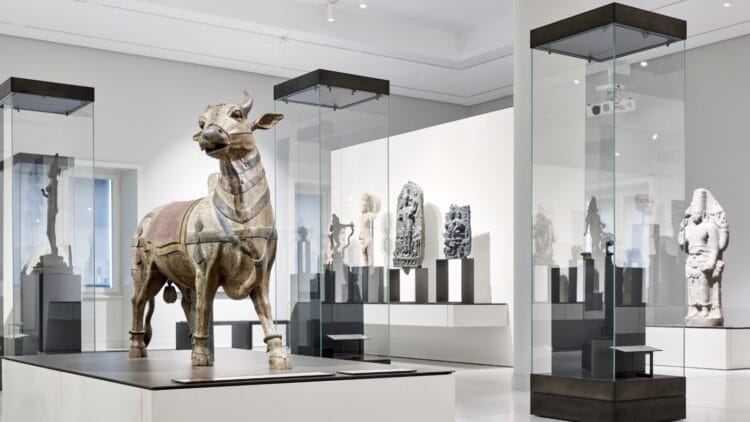
Nandi, a powerful white bull, is the preferred mount of the God Shiva. Sculptures of Nandi are often seen at Shiva Temples in India. The most impressive version in the Berlin museum is the 19th-century, painted-wood Nandi from South India.
Asian Art Museum Berlin Visitor Information
Tickets for the Asian Art Museum in Berlin
The Museum für Asiatische Kunst (Asian Art Museum) & Ethnologisches Museum (Ethnology Museum) are seen on a combined ticket, or use a three-day Berlin Museum Pass. (Museum Island passes are not valid).
Tickets for both the Asian Art and Ethnological Museums are €9 — separate tickets are not sold for the individual museums. Tickets include temporary exhibitions on the 2nd and 3rd floors of the Humboldt Forum.
Admission is free for children under 18, and discounts are offered to students.
From 13 July 2026, day tickets for the Humboldt Forum are no longer used. The various museums and major exhibitions will use separate admission tickets.
Although both the Ethnological and Asian Art Museums are part of the Staatliche Museen zu Berlin, admission is not included in the Museum Island day ticket or Welcome Card +Museum Island, but discounts are given on the standard Berlin Welcome Card.
The various museums and exhibitions inside the Humboldt Forum (the rebuilt Berliner Schloss / Palace) are managed individually. Humboldt Forum day tickets are no longer used, and separate admissions are charged for large exhibitions and museums.
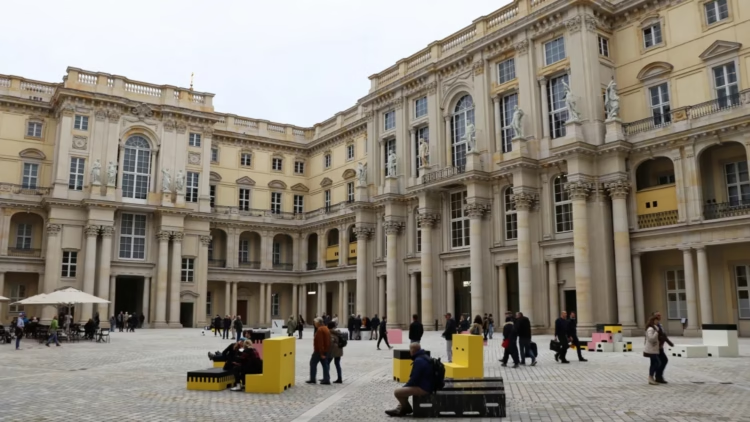
Admission to the Humboldt Forum building, including the impressive Schlüterhof courtyard, and to some of the smaller exhibitions is free.
The food and café options at the Humboldt Forum are significantly better than at other top sights in Berlin and are worth visiting even if you are not going to a museum.
Opening Hours of Humboldt Forum Museums
The Asian Art Museum and the Ethnological Museum follow the opening hours of the Humboldt Forum and not the other Museum Island SMB museums.
Opening hours of the museums are 10:30 to 18:30 — Wednesday to Monday. Parts of the building stay open much later, with many evening events starting at 19:00.
Note that the Humboldt Forum museums are closed on Tuesday but open on Monday.
Transportation to the Asian Art Museum in Berlin

The Humboldt Forum is the rebuilt Berlin Palace (Berliner Schloss) of the Prussian kings. The exterior was largely reconstructed according to the appearance of the original Baroque palace that was destroyed by the East German regime after the Second World War. The interior is modern, but the rooms are palatial, and the size of the museum often surprises visitors.
The Humboldt Forum is on the southern side of Berlin’s popular Museumsinsel across the square from the Altes Museum and the Berlin Cathedral.
The easiest public transportation options are the U-Bahn U5, or buses 100 and 300 to U Museumsinsel. (Lustgarten is no longer used as the bus stop name.)
More on the Berlin State Museums (Staatliche Museen zu Berlin):
Berlin State Museum Basics:
- Top National Museums and Galleries (brief overview)
- Berlin State Museums: What Is Seen Where?
- Opening Hours (2026)
- News & Special Exhibitions
- Ticket Prices (Buy online from GetYourGuide or SMB)
- Save with the Berlin Museum Pass & Berlin Welcome Cards
- Staatliche Museen zu Berlin (official website in German & English)