The Pergamon Museum, with its Greek altar temple from antiquity, the Ishtar Gate from Babylon, and Islamic art, is traditionally the most popular museum in Berlin.
Re-opening 2027: The Pergamon Museum is currently closed, but will partly reopen on 4 June 2027, with the Pergamon Altar again on display.
The Pergamon Museum on Museum Island is usually Berlin’s most popular museum. The museum is famous for displaying entire architectural monuments from antiquity, including the Pergamon Altar, the Market Gate of Miletus, the Ishtar Gate of Babylon, and one of the world’s finest collections of Islamic art. Other top must-see sights in the Pergamon Museum include the stone façade of the caliph’s palace of Mshatta and the Aleppo Room. Expect time-slot reservation tickets to be essential when the museum reopens in mid-2027. The average visitor spent up to two hours in the Pergamon Museum.
Pergamon Museum in Berlin: Quick Guide
📍 Location: Museum Island (Museumsinsel), Berlin
⛔ The whole Pergamon Museum is closed until 4 June 2027!
⭐ Don’t Miss:
- Pergamon Altar
- Mshatta Palace Façade
- Aleppo Room
⭐ Return in 2037 to See:
- Ishtar Gate and Babylonian Procession Way
- Market Gate of Miletus
⏱ Time Needed:
Around two hours
🎟 Best Ticket:
Museum Island Day Ticket if visiting more than one museum
📅 Best Time to Visit:
Whenever you can secure a time-slot reservation. (The museum is closed until 4 June 2027.)
👨👩👧👦 Good For:
Large architectural elements from antiquity; Islamic art
Why Visit? Berlin’s best museum for large architectural elements and sculptures from antiquity, and one of Europe’s largest Islamic art collections.
Pergamon Museum Reopening Timeline
- ✅ Pergamon Das Panorama exhibition (currently open)
- ⛔ Museum closed since October 2023
- ✅ Partial reopening: 4 June 2027
- ✅ Pergamon Altar returns in 2027
- ⏳ Ishtar Gate returns in the late 2030s
- ⏳ Full museum reopening expected around 2037
Visitors wanting to see the Ishtar Gate and Market Gate of Miletus should note that these highlights will not be visible until the complete reopening of the museum around 2037.
Jump to:
Top 6 · Greek · Roman · Egyptian · Pergamon Altar · Ishtar Gate · Islamic Art
Top Collections in the Pergamon Museum in Berlin
The Pergamon Museum combines three world-class museums of the Staatlichen Museen zu Berlin under one roof (and one ticket):
- Classical Antiquities / Antikensammlung – one of the world’s most important collections of Greek and Roman art.
- Museum of the Ancient Near East / Vorderasiatische Museum – 6,000 years of cultural history from mainly Mesopotamia, Syria, and Anatolia.
- Museum of Islamic Art / Museum für Islamische Kunst – one of the largest collections of Islamic art in the world.
Top Six Highlights in the Pergamon Museum
The six most popular must-see items in the Pergamon Museum are:
Open from mid-2027:
- The Pergamon Altar – A Greek temple façade and altar. (Some items and explanations in the special, separate Pergamon Das Panorama exhibition.)
- Mshatta Palace Façade – a decorated wall from the caliph’s palace in Jordan (around 740 AD).
- Aleppo Room – the 400-year-old painted wood panels from a rich merchant’s house in Aleppo.
- Alhambra Cupola – a carved wooden ceiling from Spain.
Only accessible from 2037 (!):
- Ishtar Gate of Babylon – one of Berlin’s absolute highlights (and the largest part is not even shown).
- Market Gate of Miletus – a Roman façade and the largest object from antiquity, rebuilt inside a museum.
TIP: Plan to spend two hours in the Pergamon Museum, but if rushed, at least see the top highlights.
Classical Antiquities Collection in the Pergamon Museum
Only a small selection of the Berlin State Museums’ antiquities collection is on display in the Pergamon Museum, but these generally are the largest architectural items. The rest of the antiquities collection is in the Altes and Neues Museum – see Berlin State Museums – What Is Seen Where? for more details.
Hall of Hellenistic Architecture
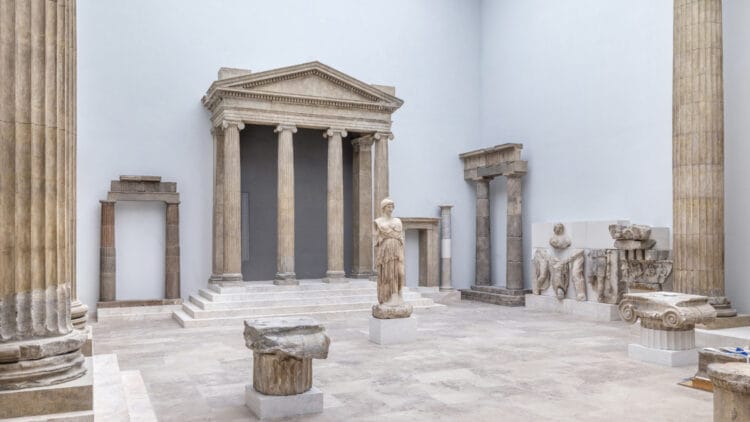
After many years, the large Greek architectural elements and some sculptures will be accessible to the general public. The hall of the Pergamon Altar is an absolute highlight, but many further impressive items are displayed in adjacent rooms.
Greek Pergamon Altar Hall
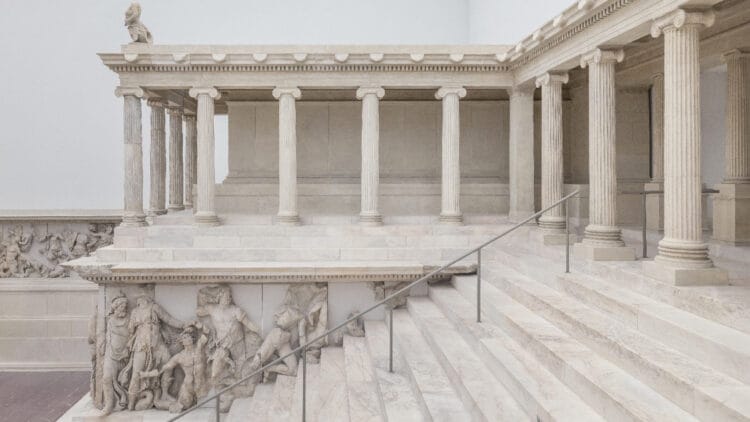
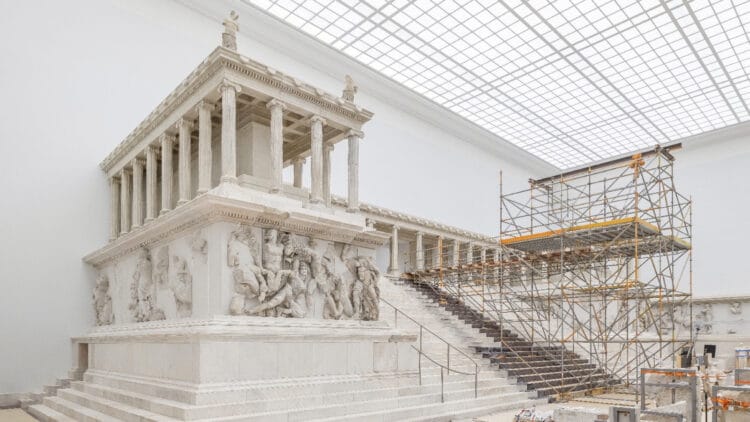
The Pergamon Altar, which gave the museum its name, is not a simple, small church altar but rather the full front of a Greek temple from the 2nd century BC. Not only the friezes but also the columns were brought to Berlin, allowing a third of the original temple to be reconstructed in full size.
The reconstructed western facade of the Pergamon Altar measures 34.2 m (112 ft) deep by 36.8 m (121 ft) high. (Somewhat surprisingly, not the largest item in this museum.)
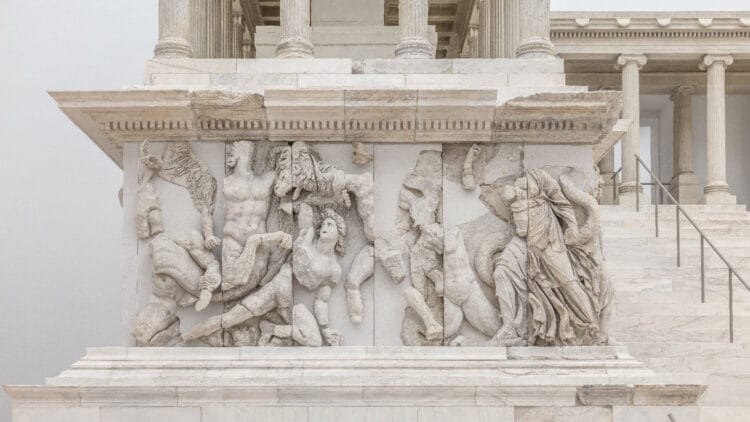
The main theme of the lower frieze depicts the Gigantomachy. Over a hundred detailed and unique larger-than-life sculptures illustrate this famous event from Greek mythology of the Olympian gods in battle with the Giants.
The full lower frieze measures 2.3 m (7.5 ft) high and 110 m (361 ft) long. It would have encircled the whole altar, but here run along the walls of this amazing hall at the center of the museum.
In a separate building, Pergamonmuseum. Das Panorama, a huge 360° panorama painting by Yadegar Asisi, places the altar in historical context. If this temporary exhibition remains in place, it is quite worth visiting for 15 – 20 minutes to fully understand the Pergamon altar before seeing the actual item in the real museum.
Museum of Islamic Art in the Pergamon (Open 2027)
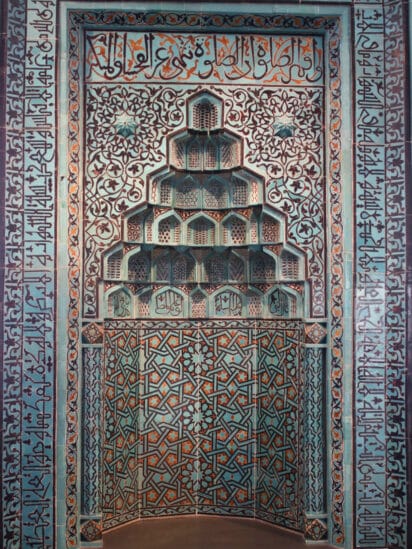
The Museum of Islamic Art (Museum für Islamische Kunst) fills the top floor of the North Wing of the Pergamon Museum. It is one of the largest collections in the world and covers art from the 7th to the 19th centuries. The large items are the most impressive, but it is also worth admiring the intricate and fine details in the smaller items.
The emphasis in this museum is on art. Many visitors are surprised by how little of the art here is about religion. This is in stark contrast to, for example, the Gemäldegalerie and Bode Museum, where Christian themes and symbols dominate, e.g., the crucifixion, Madonna and Child, saints, and biblical events. In Islamic art, the portrayal of people and animals is rare, so expect plants and especially intricate patterns, in addition to excellent craftsmanship.
The three top highlights in the Islamic Art collection are the Mshatta Facade, the Alhambra Cupola, and the Aleppo Room. Further exhibitions include carpets, books, prayer niches, jewelry, ceramics, carved ivory, and decorated household objects.
Mshatta Façade
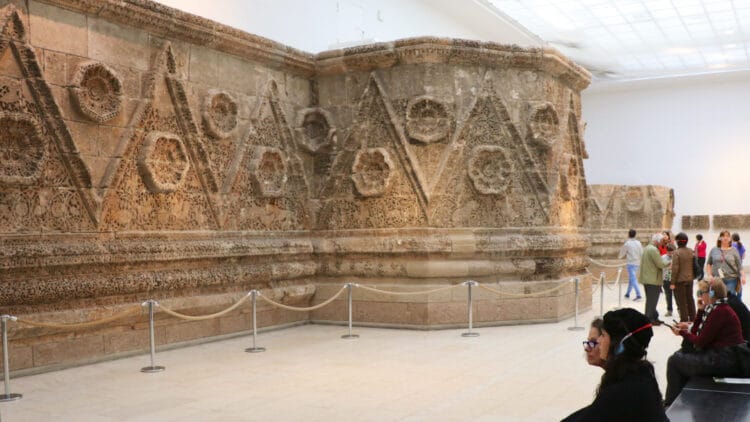
The Mshatta Façade is the largest of the over 1,000 items displayed in the Islamic Art Museum and is part of a lavishly decorated desert castle wall built in Jordan around AD 740 for the caliph. The façade on display is 5 m (16 ft) high and 33 m (108 ft) wide – the rest of the original ruins are still next to Amman airport in Jordan.
This facade was a present from the Ottoman sultan to Kaiser Wilhelm II in 1904. The gift led directly to the foundation of the Museum of Islamic Art – the first major one outside the Islamic world.
Alhambra Cupola
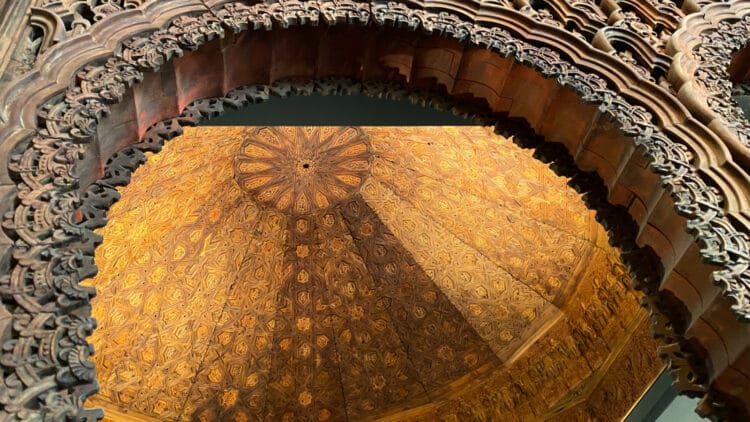
The Alhambra-Kuppel (Cupola from the Alhambra) is a domed, carved wooden ceiling, carved around 1320. It was originally installed in a viewing tower at the Palacio del Partal (also Torre de las Damas) in the Alhambra complex in Granada, Spain.
In 1891, a rich German banker received permission from the Spanish authorities to transfer the cupola to Germany, where it was installed in a private residence.
The square base measures 355 cm (11.6 ft), but the top center is 190 cm (6.2 ft) deep.
Aleppo Room
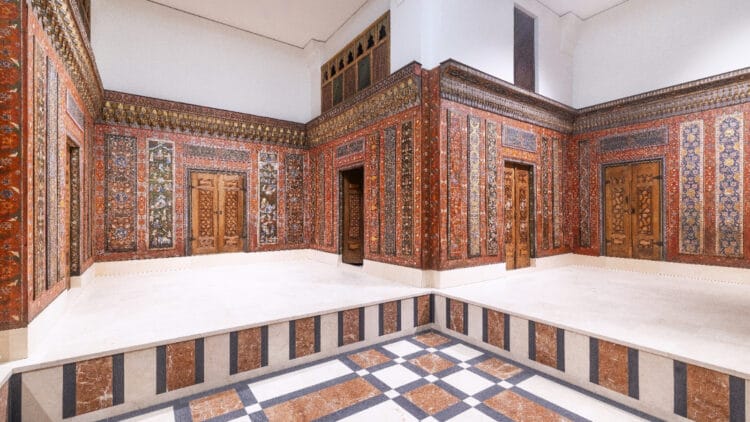
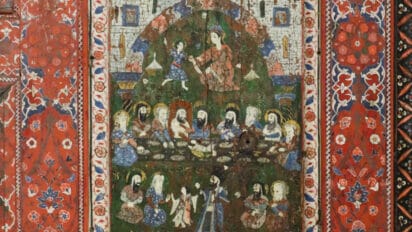
The Aleppo Room is an ornately painted room from the house of a rich trader in Aleppo, Syria, made between 1600 and 1603. The excellently preserved wall panel paintings include Christian, Jewish, Persian, East Asian, and Arabic motifs. These are rare paintings in the collection, including people and animals.
The panels are 260 cm (8.5 ft) high and 35 m (115 ft) wide in total. The display resembles the original positioning of the panels in a reception room.
Museum of the Near East (Partly Open 2027)
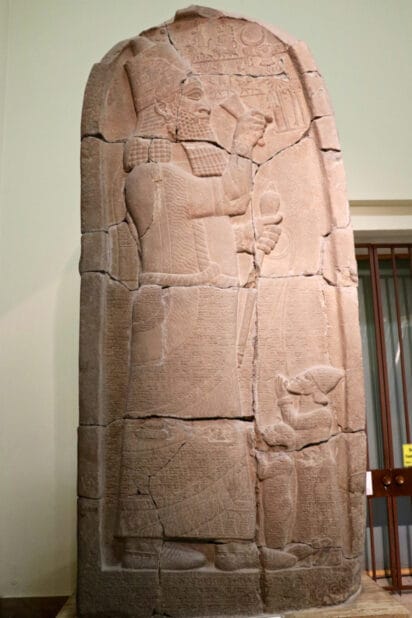
Although most of the Vorderasiatisches Museum (Museum of the Near East) is closed until 2037, some highlights will be displayed, including the monumental victory stele of the Assyrian King Esarhaddon, weighing over six tons.
However, for the absolute highlights of this fantastic collection, the Ishtar Gate and the Babylonian processional way, visitors will have to return to Berlin in the late 2030s.
The Victory stele of Esarhaddon is a dolerite stele commemorating the return of Esarhaddon after his victory over Pharaoh Taharqa in northern ancient Egypt in 671 BC. It was discovered in 1888.
The front relief shows the victorious King Asarhaddon of Assyria with defeated Egyptians who are bound by hands and feet and led by a rope through the lower lips. The sides of the column show the sons of the king.
With Esarhaddon’s victory, he: “slaughtered the villagers and ‘erected piles of their heads'”. As Esarhaddon wrote later: Memphis, his royal city, in half a day, with mines, tunnels, assaults, I besieged, I captured, I destroyed, I devastated, I burned with fire. His queen, his harem, [Prince] Ushankhuru his heir, and the rest of his sons and daughters, his property and his goods, his horses, his cattle, his sheep in countless numbers, I carried off to Assyria.
Museum of the Ancient Near East in the Pergamon (from 2037)
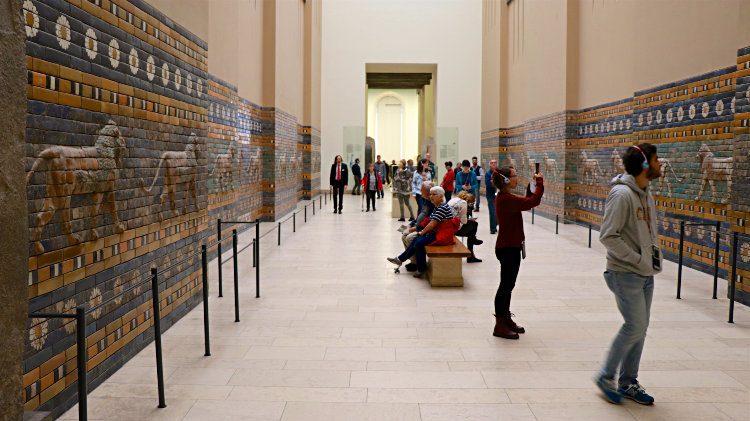
Most of the Ancient Near East collection will remain closed until 2037, but a few items, including the monumental victory stele of the Assyrian King Esarhaddon, will be on view from 2027.
Most of the Museum of the Ancient Near East collection of 27,000 items will have to wait until the complete restoration of the South Wing.
Ishtar Gate from Babylon in the Pergamon Museum (from 2037)
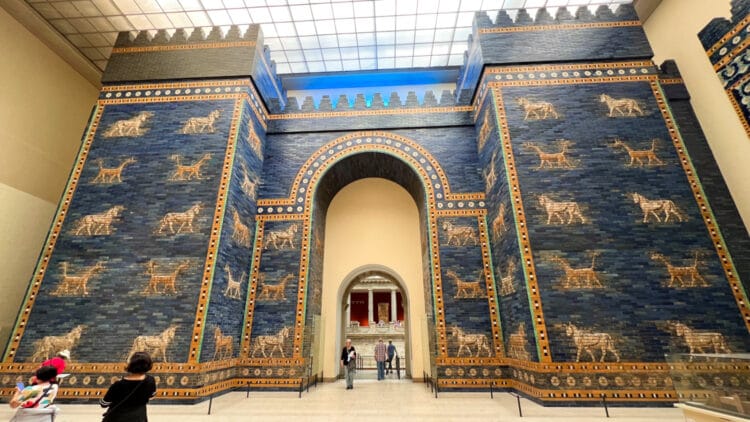
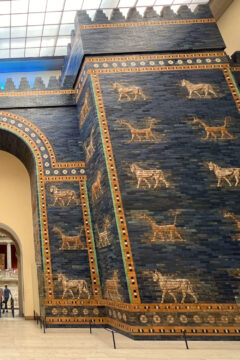
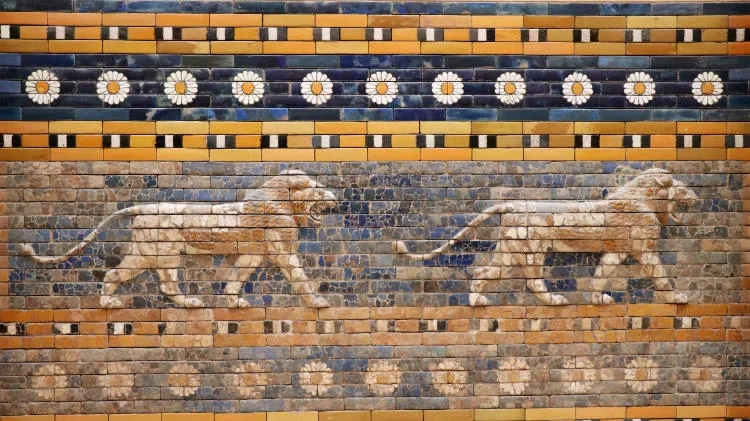
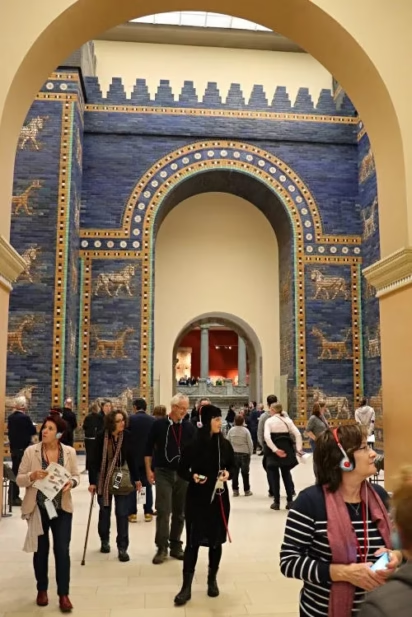
The Ishtar Gate is a town gate from Babylon from the 6th century BC. The display consists of the glazed tiles used for the outer gate and a processional way leading up to the town gate – the larger inner gate is too big to display.
The glazed tiles are mostly blue but also include depictions of several large animals in relief. Visitors face lions along the processional way, but at the gate, bulls and mystical dragons are used.
Side panels in similar colors on display are from the throne room of the palace of Nebuchadnezzar II.
The rest of the displays are mostly large, even colossal, sculptures, steles (ceremonial columns), and large wall relief carvings from Assyria. These include the earliest known written documents: cuneiform scripts on clay tablets from Uruk dating from the 4th millennium BC.
Roman Architecture (2037)
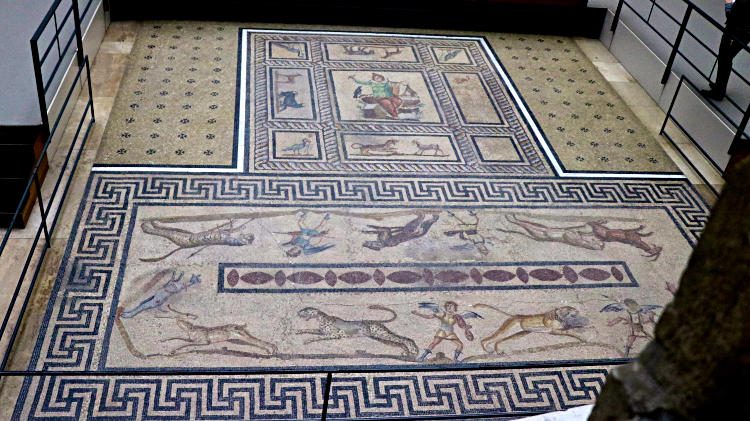
The Hall of Roman Architecture in the Pergamon Museum will only reopen in 2037. However, many classical sculptures and Roman antiquities are permanently displayed in the Altes and Neues Museums.
Market Gate of Miletus in the Pergamon Museum, Berlin (from 2037)
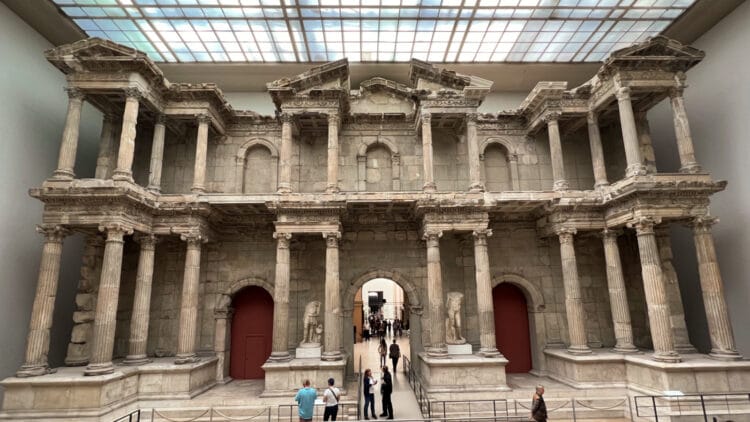
The façade of the Roman market gate from Miletus is the largest reconstruction of a monument from antiquity inside a museum. This 2nd-century AD gate from Miletus in Asia Minor is nearly 16 m (52 ft) high and 29 m (95 ft) wide. Around 60% of the display is original material.
Several further large Roman statues and architectural features are on display. Arguably, the most impressive is the large floor mosaic from a private home with two scenes: Orpheus playing the lyre surrounded by enchanted animals, contrasted by a more violent hunting scene in an adjacent room.
Egyptian Architecture (from 2037)
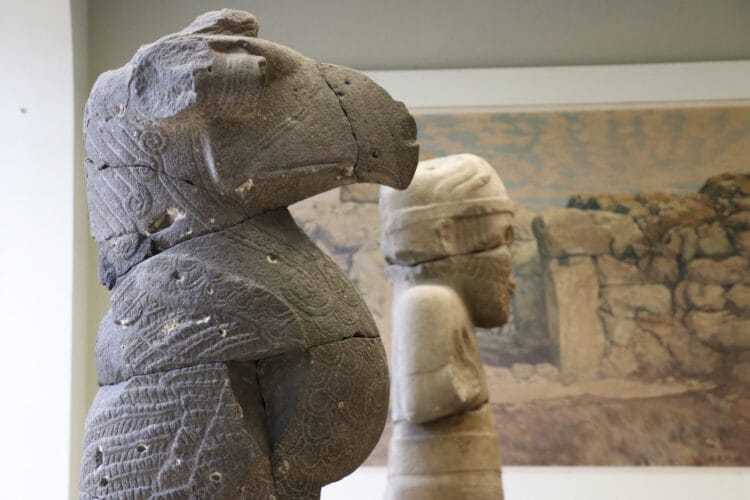
A new west wing for the museum is planned and should open with the rest of the museum in 2037. The highlights here will be Egyptian architecture with an emphasis on the structure of an Egyptian temple. The two main items to be constructed here are the Kalabsha Gate, a partial reconstruction of the colonnade courtyard of the Sahu-Rê temple, and the large statues of gods from the rulers’ palace of Tell Halaf.
The rest of Berlin’s huge Egyptian collection, including the Bust of Queen Nefertiti, is displayed in the Neues Museum.
Where Are Antiquities Exhibited in Berlin
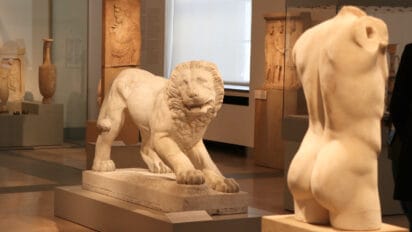
To see Berlin’s popular Antikensammlung (Collection of Antiquities), you’re best off buying a Museum Insel ticket or more.
This impressive collection is spread through three museums: the Altes Museum, Neues Museum, and Pergamon Museum. Further temporary exhibitions are in the James Simon Gallery.
What antiquities are seen in which Berlin Museum? The answer is not that easy, but use the following as a rough guide:
- Archaeological finds from the Stone Age to the Middle Ages and items from the Roman provinces are in the Neues Museum (together with the large Egyptian collection).
- The bigger, the more likely it is in the Pergamon Museum.
- The more classical the civilization, the more likely you’ll see it in the Altes Museum. (Classic Greek, Etruscan, Roman sculptures and pottery.)
- See also Berlin State Museum Collections Explained: What is Seen Where? for a fuller guide to Berlin’s vast museum exhibitions and magnificent art galleries.
Pergamon Museum Berlin Visitor Information
Tickets for the Pergamon Museum
Note: The Pergamon Museum is closed until 4 June 2027
Admission tickets for the Pergamon Museum are likely to be priced similarly to other Museum Island museums, i.e., currently €14 and free for children up to 18 years old.
The Pergamon Museum has not yet announced when tickets for individuals will go on sale. Time-slot reservation tickets will almost certainly be obligatory to visit the Pergamon Museum.
Group bookings for Pergamon Museum visits are possible from 1 July 2026, but the actual visit dates will only be after June 2027.
A variety of combination discount savings tickets for the Pergamon Museum is likely, but still unconfirmed:
- €24 – Museum Island Day Ticket: admission to all SMB museums on Museum Island for a day, including Das Panorama exhibition.
- €32 – Museum Pass Berlin: unlimited admission to over 30 top museums in Berlin on three consecutive days, including all Museum Island and state museums.
- €62 – Berlin Welcome Card 72h + Museum Island: includes transportation and free admission to the Museum Island museums.
- €25 to €100 – Annual Membership Passes: admission for a year to all 19 Staatliche Museen zu Berlin museums.
Opening Hours of the Pergamon Museum

The Pergamon Museum in Berlin is currently closed. Parts of the museum will reopen on 4 June 2027, while the whole museum will only be open around 2037!
Final opening hours have not been announced yet. Museum opening hours are likely to be as a minimum from Tuesday to Sunday from 10:00 to 18:00.
All Berlin State Museums are closed on December 24 and 31, with shorter hours on January 1.
TIP: Time-slot reservations are likely to be obligatory for the first few months after the Pergamon’s reopening. As the museum opening at 10:00 is not that early, late afternoon is likely to be the more pleasant time of the day to visit. If you cannot avoid vacation days or weekends, try entering the museum from 11:30 to 13:00, when groups are likely to be on lunch. (This advice goes for all of the larger museums in Berlin.)
Transportation to the Pergamon Museum

The Pergamon Museum, Bodestraße 1-3, 10178 Berlin, is on Museum Island in Mitte in the heart of Berlin. The only entrance to the Pergamon Museum is through the modern Simon James Gallery.
Museumsinsel (U-Bahn 5 and buses 100 or 300) on Unter den Linden in front of the Berliner Schloss / Humboldt Forum is the simplest public transportation stop.
The old entrance off Am Kupfergraben and the temporary entrance between the Neues Museum and Alte Nationalgalerie are closed.
More on the Berlin State Museums (Staatliche Museen zu Berlin):
Berlin State Museum Basics:
- Top National Museums and Galleries (brief overview)
- Berlin State Museums: What Is Seen Where?
- Opening Hours (2026)
- News & Special Exhibitions
- Ticket Prices (Buy online from GetYourGuide or SMB)
- Save with the Berlin Museum Pass & Berlin Welcome Cards
- Staatliche Museen zu Berlin (official website in German & English)