Visit the Humboldt Forum in Berlin’s reconstructed palace to explore world cultures, Asian art, ethnology, and Berlin’s global connections through several outstanding museums and exhibitions.

The large Ethnological and Asian Art museums are the top attractions of the Humboldt Forum in the rebuilt Berlin Palace. Both museums have among the most important collections in the world. Global Berlin is another top attraction that focuses on the history of Berlin and places the city in context with global developments at different stages of its history. Several smaller temporary exhibitions and much of the building are free to visit. The main museums, larger special exhibitions, and the roof terrace require tickets.
Humboldt Forum in Berlin: Quick Guide
📍 Location: Humboldt Forum on Museum Island, Berlin
⭐ Don’t Miss:
- Ethnological Museum with Benin Bronzes
- Asian Art Museum
- Berlin Global Exhibition
⏱ Time Needed:
Half day — 60 to 90 minutes per museum
🎟 Best Ticket:
Combination ticket for the Asian Art and Ethnological Museums
📅 Best Time to Visit:
Weekdays at 10:30 or after 15:00
✅ Open on Mondays
⛔ Closed on Tuesday
👨👩👧👦 Good For:
World cultures, art, and archaeology from Asia, Oceania, Africa, and the Americas; Berlin and the world.
Why Visit? Berlin’s best museums on life, civilizations, and art from outside Europe, and a large, interactive exhibition of Berlin’s interaction with the world.
Jump to:
Ethnological · Asian Art · Berlin Global · Exhibitions · Tickets · Hours
Humboldt Forum in Berlin
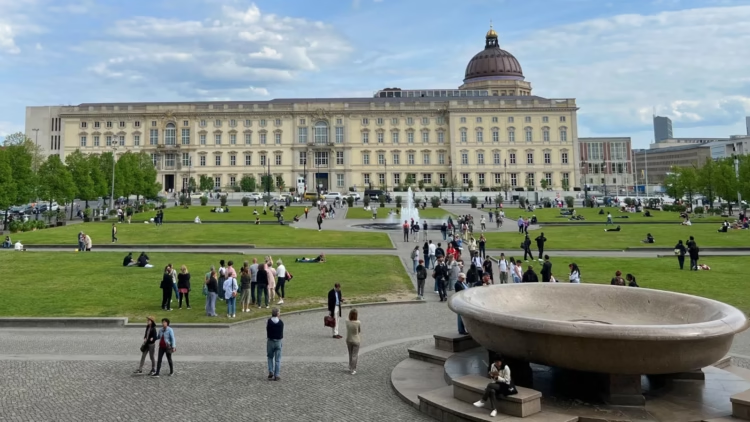
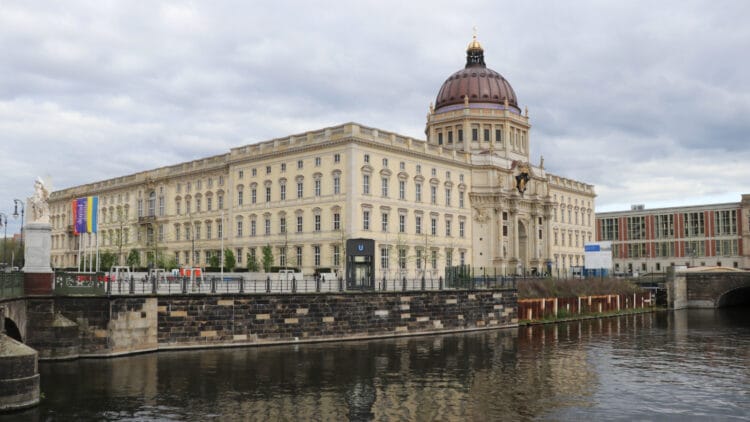
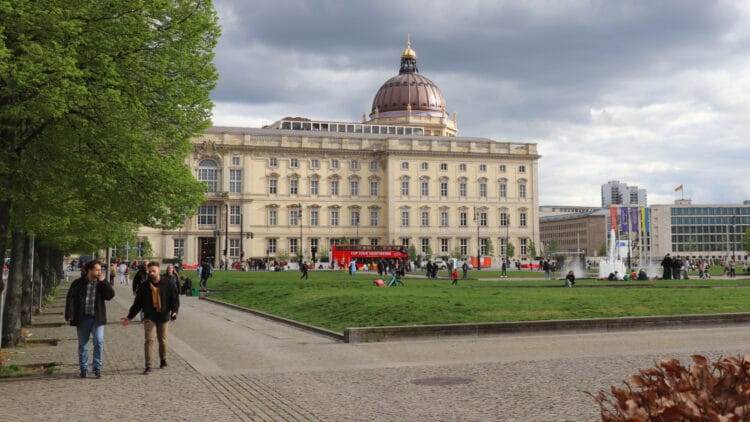
The Humboldt Forum is the name given to the reconstructed Berlin Palace on Museum Island in the heart of Berlin. The building mostly resembles the Baroque Schloss of the Hohenzollerns, but the interior is completely modern.
Several institutions share the Humboldt Forum, but the Ethnological Museum, the Asian Art Museum, the Humboldt University, and the Stadtmuseum Berlin (local history museum) have permanent exhibition spaces here.
An extensive cultural program, including discussions, lectures, and performances, enhances the larger exhibitions and special events.
Ethnological Museum and Asian Art Museum in Berlin

The absolute cultural highlights in the Humboldt Forum are the Ethnologisches Museum (Ethnological Museum) and the Museum für Asiatische Kunst (Asian Art Museum) that are part of the Staatliche Museen Berlin (Berlin State Museums). These two museums are among the largest and most significant museums of their kind in the world.
The Ethnological Museum (founded in 1873) and the Asian Art Museum (founded in 1906) both trace their origins back to the Brandenburg-Prussian Cabinet of Curiosities in the Berlin Palace.
The Ethnological Museum is on the second floor of the Humboldt Forum, while the Asian Art Museum is on the third floor. Although on different floors and with separate entrances, these two museums closely cooperate and are always seen on combination tickets. Temporary exhibitions by both museums are included in regular admission tickets.
Both museums are physically very big. The average visitor spends around 90 minutes in each museum. Even seeing just the highlights will be hard to do in less than an hour per museum.
Ethnological Museum in the Humboldt Forum
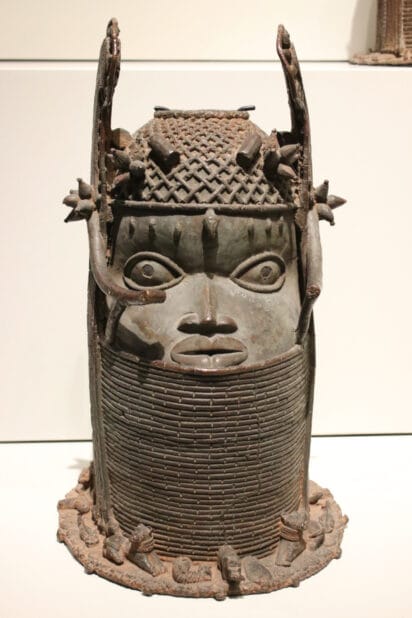
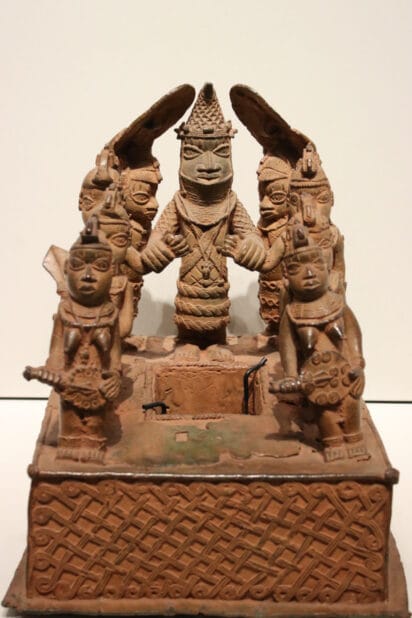
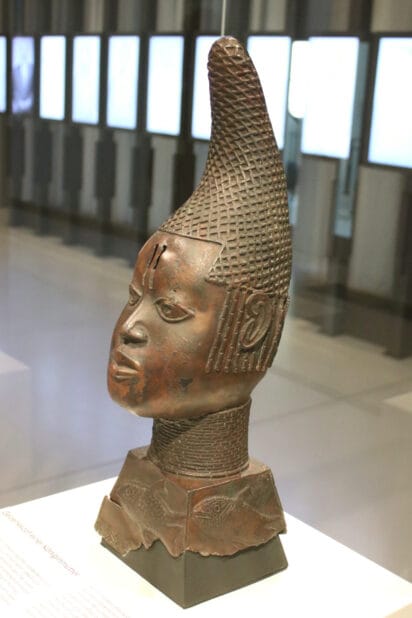
The Ethnological Museum in Berlin displays one of the world’s largest collections of art and cultural artifacts from Africa, the Americas, Asia, and Oceania. It is one of the best museums in Germany for exploring civilizations beyond Europe.
Top highlights in the Ethnological Museum Berlin include:
- Benin Bronzes
- Woodcarved items from Cameroon
- Pre-Columbian items from Mesoamerica and South America
- Outrigger boats from Oceania
- See also Ethnological Museum Berlin: Highlights and Visitor Guide for more details on this very interesting museum.
Asian Art Museum in the Berlin Humboldt Forum
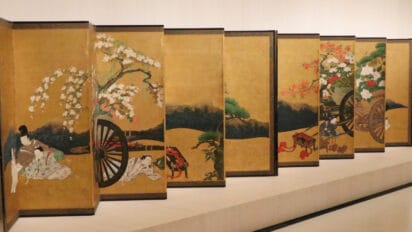
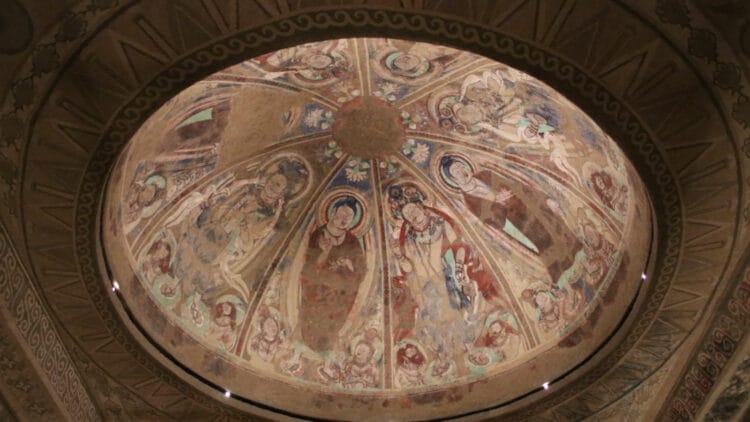
The Asian Art Museum in Berlin is one of Europe’s finest collections of Asian art, with Buddhist cave temples, Chinese imperial treasures, Japanese screens, and religious art from across Asia.
The top highlights in the Asian Art Museum Berlin include:
- Reconstructed Buddhist caves with original art from the Silk Road
- Religious art from all parts of Asia, including Hinduism, Buddhism, Jainism, and courtly art.
- Ceramics, paintings, and calligraphy from East Asia
- A Japanese teahouse and large folding screens
- Chinese court art, including an 18th-century throne
- Ethnological items from Asia
- See also Visit the Asian Art Museum in Berlin’s Humboldt Forum for more on this interesting art and cultural museum.
The Berlin Global Exhibition in the Humboldt Forum

Berlin Global is a special long-term exhibition by the Stadtmuseum Berlin (City Museum Berlin) featuring a state-of-the-art exhibition with many interactive experiences. It reveals the essence and history of Berlin through seven themes: Revolution, Free Space, Boundaries, Entertainment, War, Fashion, and Interconnection.
The exhibition and displays are big, bold, and mostly beautiful. To get the most out of the Berlin Global, either take a guided tour or interact with the many displays.
The exhibition is also accompanied by a very active events and activities program
Berlin Global is very popular, especially with teenagers and students. The average visitor spends around two hours if engaging actively with the displays.
Special and Temporary Exhibitions on the Humboldt Forum
The Humboldt Forum has a very active cultural and activities program. Furthermore, in addition to the museums, it hosts several further special and temporary exhibitions.
Some large temporary exhibitions have individual entry tickets, but admission is free to many of the smaller exhibitions or included in standard museum tickets.
The current free (semi-) permanent exhibitions include:
- On the history of the Humboldt Forum: the Castle Cellars & the Sculpture Hall
- Insights. The Humboldt Brothers
- On Water: WasserWissen in Berlin (in the Humboldt Laboratory)
- Video Panorama
- Temporary displays in the Asian Art and Ethnological Museums
Geschichte des Ortes / History of the Humboldt Forum Site

A relatively small permanent exhibition on the history of the Humboldt Forum site is spread through several parts of the current building. Highlights include old foundations and walls in the basement (Schlosskeller) and some original sculptures from the former Berlin Palace in the Skulpturensaal. Admission to these exhibitions is always free.
The exterior of the Humboldt Forum closely follows the appearance of the former Renaissance-Baroque Berliner Schloss, except for the modern facade facing the Spree River. The interior, however, is entirely modern, and none of the palace’s showrooms have been reconstructed. (Visit the Neues Palais in Potsdam to see how the Hohenzollerns liked to live.)
Berlin, originally a pair of settlements on the Spree River, only gained prominence after the Hohenzollern family took control of Brandenburg in 1415 and decided to build a palace in Berlin, despite violent opposition from the locals.
The palace expanded with the growing importance of Brandenburg (and the later Kingdom of Prussia). The Renaissance palace was converted into a Baroque complex early in the 18th century. It was enlarged further with the addition of a cupola and chapel in the mid-19th century.
After the end of the monarchy in 1918, it was decided to use the building for cultural and academic institutions. The Schloss survived most of the Second World War but was severely damaged in February 1945.
In 1951, the German Democratic Republic decided to demolish the palace, but it was only replaced with the Palace of the Republic in the 1970s. This “people’s palace” famously housed the East German parliament but also restaurants, a disco, and a bowling alley. This “palace” was demolished after the reunification of Germany. The rebuilt Berliner Schloss, now known as the Humboldt Forum, opened in 2021 and is used for museums, exhibitions, and cultural events.
Einblicke. Die Brüder Humboldt / Impressions. Wilhelm and Alexander von Humboldt
The Humboldt Forum (like Berlin’s most prestigious university) is named after the brothers Wilhelm and Alexander von Humboldt. A small permanent exhibition (free), on the ground floor under the staircase (Treppenhalle), explains their lives and influence:
- Wilhelm von Humboldt (1767-1835) was a Prussian philosopher, educationalist, diplomat, and linguist. He introduced the concept of holistic education that combined arts and sciences together to promote understanding and cultural knowledge.
- Alexander von Humboldt (1769-1859) was a polymath — a geographer, naturalist, and scientific explorer of the Americas, and a proponent of Romantic philosophy and science.
Taking inspiration from the brothers, the Humboldt Forum brings together the sciences, the arts, and education to encourage dialogue between experts and the public on these subjects and more, recognising that forging links between disciplines leads to the holistic knowledge that is needed to tackle the world’s urgent problems.
Humboldt Labor / Humboldt Laboratory Exhibitions
The Humboldt Labor / Humboldt Laboratory is a special exhibition and education space created by the Humboldt-Universität zu Berlin (Humboldt University of Berlin) to explain pressing issues or contemporary responses through natural sciences. Admission to these exhibitions is usually free.
The current exhibition, On Water. WasserWissen in Berlin, is open until 27 September 2027. Admission is free.
Temporary Exhibitions by the Asian Art and Ethnological Museums
The Asian Art Museum and Ethnological Museum frequently stage special temporary exhibitions inside the respective museums. Admission to these is included in the standard combination tickets if the exhibitions are on the second or third floor of the Humboldt Forum.
Visitor Information for the Humboldt Forum in Berlin
Opening Hours
Exhibitions and museums in the Humboldt Forum are open Wednesday to Monday from 10:30 to 18:30.
Parts of the building stay open until around midnight, with many cultural events starting after 19:00.
The Humboldt Forum is open on Mondays but closed on Tuesdays, in contrast to most other museums, including the SMB Museum Island venues.
Tickets for the Humboldt Forum
The larger exhibitions and museums in the Humboldt Forum are visited on separate tickets. Since 13 July 2026, the Humboldt Forum day ticket has been discontinued.
Admission is €9 for the combination ticket for the Asian Art and Ethnological Museums (no separate tickets available) and €9 for Berlin Global. Smaller exhibitions are usually cheaper or free.
Admission is free for under-18s, with the individual museums giving slightly different discounts for students and other pass holders.
The Berlin Museum Pass is currently valid at all museums and exhibitions in the Humboldt Forum. The standard Berlin Welcome Card gives some discounts. However, the Berlin Welcome Card + Museumsinsel and the Museum Island day ticket are not valid at any of the Humboldt Forum venues.
Admission to the palace itself and many of the smaller exhibitions on the ground floor or in the basement is free.
Tickets (€3) are necessary to visit the roof terrace with some artworks and spectacular views of Berlin.
- For the best free panoramic view of Berlin, reserve Reichstag Dome tickets — free but advance online bookings are essential.
Transportation to the Humboldt Forum in Berlin
The Humboldt Forum is on the southern half of Berlin’s famous Museum Island.

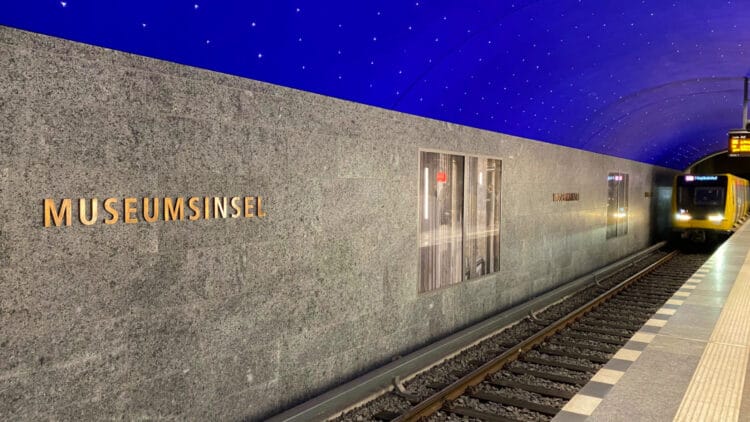
For most visitors, the easiest public transportation stop is U Museumsinsel. Buses 100 and 300 stop here, as well as the U-Bahn train U5 — handy to Hauptbahnhof, Brandenburger Tor, or Alexanderplatz. (Lustgarten is no longer used as the bus stop name.)
The main entrance to the exhibitions is from the west — under the grand dome. However, it is also possible to enter from the passage and portals at the center of the building.
Other top sights nearby are all the traditional Museum Island venues. Close by is the Friedrichswerdersche Kirche with German 19th-century sculptures, the Berliner Dom, and the ever-popular DDR Museum.
More on the Berlin State Museums (Staatliche Museen zu Berlin):
Berlin State Museum Basics:
- Top National Museums and Galleries (brief overview)
- Berlin State Museums: What Is Seen Where?
- Opening Hours (2026)
- News & Special Exhibitions
- Ticket Prices (Buy online from GetYourGuide or SMB)
- Save with the Berlin Museum Pass & Berlin Welcome Cards
- Staatliche Museen zu Berlin (official website in German & English)