Pergamonmuseum Das Panorama allows visitors a close-up view of sculptures and reliefs from the Pergamon Altar (while the main museum remains closed) and Yadegar Asisi’s panoramic painting in Berlin.
Re-opening 2027: The reopening of the Pergamon Museum is scheduled for 4 June 2027. See Pergamon Museum Berlin: Reopening in 2027 and Visitor Guide for what will be on display, and which highlights will be behind closed doors until 2037!

Das Panorama is a special temporary exhibition in Berlin showing around 80 statues from antiquity, while the Panorama refers to a huge 360° painting by Yadegar Asisi of a day in the life of the Greek metropolis Pergamon. Tickets are available online around four weeks in advance, but the Museum Island day ticket is a better deal. The average visitor spends 30 – 45 minutes at the Panorama Exhibition.
The large painting makes it very easy to understand the context of the Pergamon Altar. It may be worth seeing quickly before visiting the real temple once the Pergamon Museum itself is again open.
The Pergamon Museum is closed, but the Pergamon Altar Hall in the main museum will reopen on 4 June 2027. Many of the best sculptures that used to be at the panorama exhibition have already moved back into the main museum, but were replaced with others from the vast Antiquities Collection.
Note: Many of the sculptures mentioned and photographed in this article have already returned to the museum.
Pergamon Altar on Berlin’s Museum Island
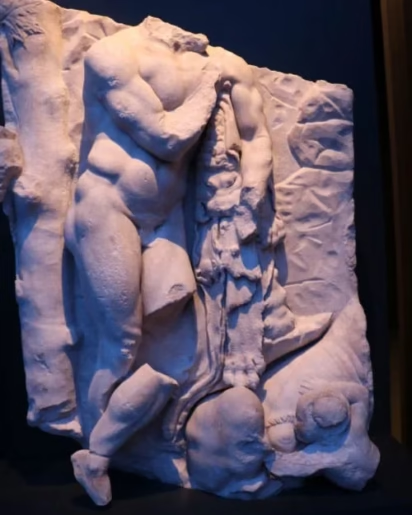
The Pergamon Altar from Greek antiquity is among the best-known works in the vast collection of the Berlin State Museums. It was originally constructed around 180 and 160 BC in the Greek city of Pergamon and was considered by the Romans to be among the highest artistic achievements of ancient Greece.
A large section of the Pergamon Altar was reconstructed in the Pergamon Museum in Berlin to show the friezes and many statues in their original position. These were excavated in modern-day Türkiye towards the end of the 19th century.
Parts of two friezes from the Pergamon Altar are exhibited in Berlin:
- The Great Frieze from the outside of the altar is 2.3 m high and 120 m long and uses around 100 statues to depict an epic battle between the giants and the Olympian gods.
- The smaller Telephus Frieze was placed on the courtyard walls that surrounded the open-air sacrificial altar platform. It is 1.58 m high and explains the foundation myth of the city founder, Telephos, son of Heracles. Of the original 74 marble slabs, 47 survived.
Pergamon Museum. Das Panorama in Berlin
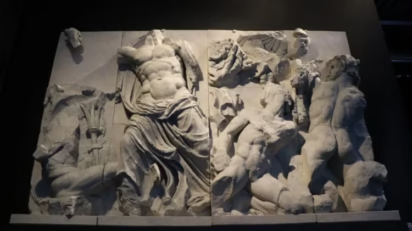
The Pergamon Museum is currently undergoing a major renovation — the entire museum closed in October 2023. As a result, the Pergamon Altar cannot be seen and will only again be fully accessible to visitors by mid-2027.
In the meantime, many of the statues are displayed in the special Panorama exhibition. It comprises of two main sections:
- A huge 360° panoramic painting representing Pergamon in antiquity; and
- Around 80 sculptures and marble relief panels from Ancient Greece.
Yadegar Asisi’s 360° Panorama Painting of Pergamon
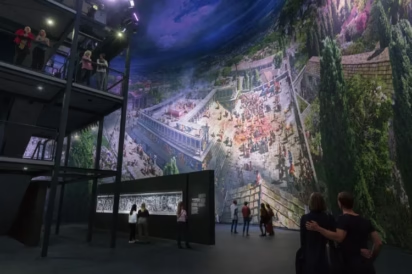
At the core of the temporary Pergamon Museum exhibition is a 3,100 sq m circular representation of the Greco-Roman city of Pergamon. This huge 360° painting by Yadegar Asisi shows the city in AD 129 on the festival of Dionysus, when the Pergamon Altar would have played a central role. The original painting was enlarged and reproduced on material measuring 30 by 104 m.
A light and sound show allows visitors to see Pergamon through a day cycle. A five-story central tower with platforms allows for a better bird’s-eye view of the city. An elevator is available if necessary.
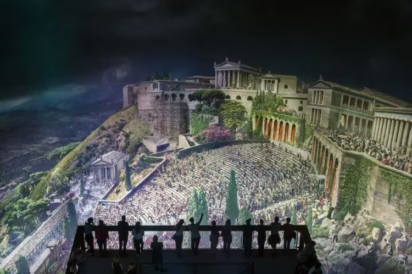
The painting succeeds in placing the Pergamon Altar in context with other monumental structures such as the theater, the temple of Dionysus, the sanctuary of Athena, and the Trajaneum. The Pergamon Altar was not a temple – it was a place for the slaughter of animals and offering by burning to the gods on the sacrificial altar.
The painting also shows the friezes in color, as they originally would have been. Plaster casts show part of the surviving frieze with a large drawing showing what the completed relief probably looked like.
Statues from Antiquity in the Pergamon Das Panorama Exhibition
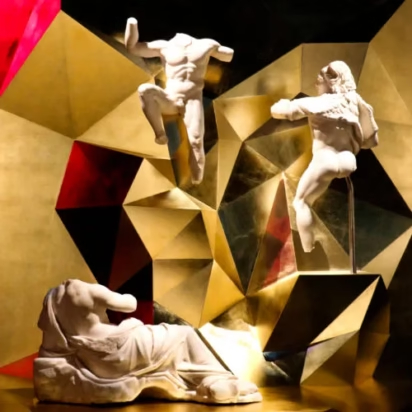
NOTE: The current selection of sculptures may be different from this description.
Impressive as the Asisi painting is, the main reason for visiting Pergamonmuseum: Das Panorama exhibition is still to see the magnificent Greek sculptures. Around 80 items are on display – mostly arranged according to geographical origin.
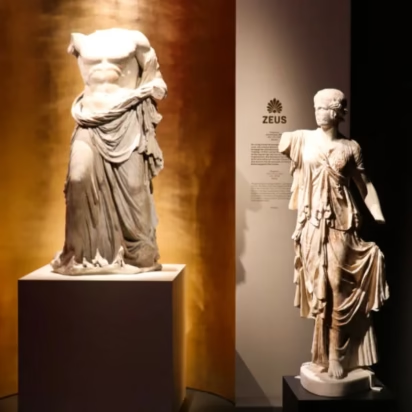
Statues of various rulers, gods, and goddesses are on display – mostly with golden backdrops. A few magnificent mosaics show sumptuous Pergamon palace interiors.
An impressive group of women statues was on the terrace of the Pergamon Altar. Changing light effects allows visitors to see these draped statues to best effect in different light conditions.
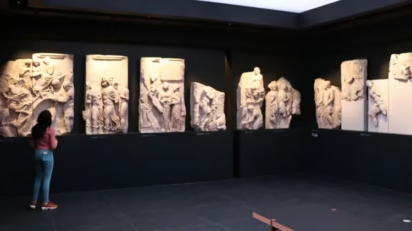
The most impressive grouping is the 47 surviving marble slabs from the smaller frieze from the Pergamon Altar. It tells the story of Telephos, son of Heracles, and the foundation of Pergamon to prove the divine ancestry of the kings of Pergamon and thus their legitimate claim to power. The oracle of Delphi, Auge, priestess of Athena, Heracles, Telephus, lions, nymphs, Troy, Achilles – they are all in there somewhere.
The Great Frieze, a high point of Greek relief art, had to remain inside the museum for conservation purposes but plaster casts and a multimedia show give a good impression of what awaits once the museum reopens.

History of the Pergamon Altar in Berlin
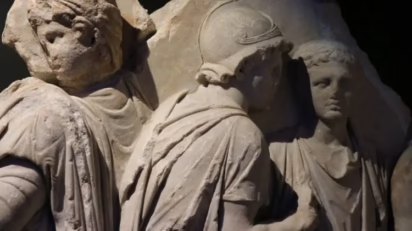
The Greek city Pergamon was situated in Asia Minor, in the northwest of present-day Turkey. It was at its peak during the second century BC, when, amongst others, the Pergamon Altar was constructed. The city lost political importance after it was handed over to the Romans in 133 BC, but it remained a cultural center with a very important library. The city is mentioned in the Book of Revelation in the Christian bible.
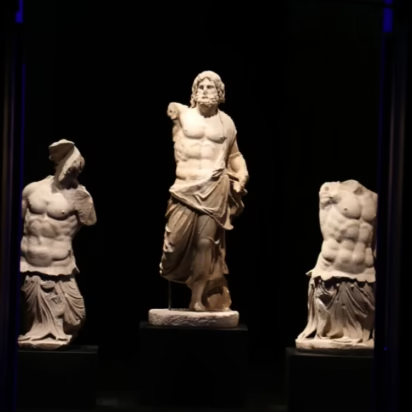
The Pergamon Altar was excavated by the Museums of Berlin between 1878 and 1886. The altar itself was already dismantled in the late 7th century AD, with some of the relief slabs used to build defensive walls. The two friezes were transported to Berlin during the 19th century under agreements on the division of finds – in Turkey, most Pergamon finds are in the Istanbul Archaeological and Bergama museums.
During the Second World War, the friezes were dismantled and stored in a bunker. Following the war, they detoured through the Soviet Union but returned to Berlin’s Museum Island in 1958.
The restored friezes returned to the Altar Hall in the Hellenic section of the Pergamon Museum in 2004. Due to structural renovations of the museum, the entire Pergamon Museum has been closed since October 2023, but the Altar Hall will again be fully accessible to the public from 4 June 2027.
→ See Pergamon Museum Berlin: Reopening in 2027 and Visitor Guide for what will be on display, and which highlights will be behind closed doors until 2037! (Spoiler alert — no Ishtar Gate of Babylonian Procession Way until late 2030s!)
Where Are Antiquities Exhibited in Berlin
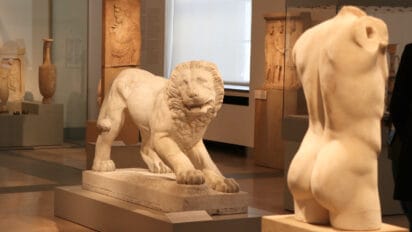
To see Berlin’s popular Antikensammlung (Collection of Antiquities), you’re best off buying a Museum Insel ticket or more.
This impressive collection is spread through three museums: the Altes Museum, Neues Museum, and Pergamon Museum. Further temporary exhibitions are in the James Simon Gallery.
What antiquities are seen in which Berlin Museum? The answer is not that easy, but use the following as a rough guide:
- Archaeological finds from the Stone Age to the Middle Ages and items from the Roman provinces are in the Neues Museum (together with the large Egyptian collection).
- The bigger, the more likely it is in the Pergamon Museum.
- The more classical the civilization, the more likely you’ll see it in the Altes Museum. (Classic Greek, Etruscan, Roman sculptures and pottery.)
- See also Berlin State Museum Collections Explained: What is Seen Where? for a fuller guide to Berlin’s vast museum exhibitions and magnificent art galleries.
Pergamon Museum Das Panorama Visitor Information

Tickets for Pergamonmuseum Das Panorama
Tickets for the temporary Pergamonmuseum Das Panorama exhibition are €14. Time-slot reservations are not currently possible but could be obligatory at busy periods. In such cases, time-slot reservations are included when buying tickets.
A combination ticket for all Museumsinsel museums on the same day, including Das Panorama, is €24. Bearers of other museum passes, including the Museum Island Day Ticket, 3-day Museum Pass Berlin, and some Welcome Cards may make free reservations to see Das Panorama.
Admission is free for children under 18.
The Panorama exhibition is worth seeing, but the price of €14 is fairly steep when compared to how much can be seen in larger museums for the same money. It is, however, absolutely worth visiting if using a combination pass.
Opening Hours of the Pergamon Museum Das Panorama Exhibition
The opening hours of the Panorama exhibition are Tuesday to Sunday from 10:00 to 18:00.
Transportation to Pergamonmuseum Das Panorama
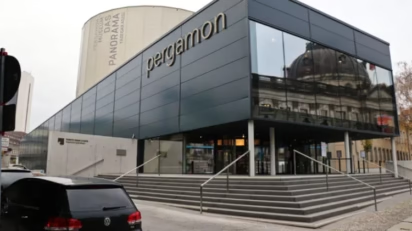
The Pergamonmuseum. Das Panorama exhibition is at Am Kupfergraben 2. This location is near the original Pergamon Museum entrance, but off Museum Island, to the north of the railway line, very close to the entrance of the Bode Museum.
The closest public transportation stop is Am Kupfergraben on trams M1 and 12, but many may find it simpler to walk from Friedrichstraße station (S-Bahn trains), or from Museuminsel (buses 100 and 300 or U-Bahn U5).
Due to ongoing construction in the area, walking paths change, but signposting is very clear.
More on the Berlin State Museums (Staatliche Museen zu Berlin):
Berlin State Museum Basics:
- Top National Museums and Galleries (brief overview)
- Berlin State Museums: What Is Seen Where?
- Opening Hours (2026)
- News & Special Exhibitions
- Ticket Prices (Buy online from GetYourGuide or SMB)
- Save with the Berlin Museum Pass & Berlin Welcome Cards
- Staatliche Museen zu Berlin (official website in German & English)