The Ethnological Museum in Berlin displays one of the world’s largest collections of art and cultural artifacts from Africa, the Americas, Asia, and Oceania. Housed in the Humboldt Forum, it is one of the best museums in Germany for exploring civilizations beyond Europe.

The Ethnologisches Museum in the Humboldt Forum displays the world-class ethnological collections of the Staatliche Museen zu Berlin. It showcases the world’s civilizations outside Europe with exhibitions spanning epochs and continents. The collection includes around 500,000 ethnographic, archaeological, and historico-cultural objects from Africa, Asia, America, and Oceania. Although most of the Benin Bronzes have been restituted to Africa, the museum still displays an impressive number of long-term loans. It cooperates closely with the Asian Art Museum, also in the Humboldt Forum. The Museum of Ethnology follows the opening hours and tickets of the Humboldt Forum and not of the Berlin Museum Island.
Ethnological Museum in Berlin: Quick Guide
📍 Location: Humboldt Forum on Museum Island, Berlin
⭐ Don’t Miss:
- Benin Bronzes
- Outrigger boats from Oceania
- Pre-Columbian artifacts from the Americas
- Woodcarvings from Cameroon
⏱ Time Needed:
90 minutes
🎟 Best Ticket:
Combination ticket with the Asian Art Museum (Museum Island Tickets not valid!)
📅 Best Time to Visit:
Weekdays at 10:30 or after 15:00
✅ Open on Mondays
⛔ Closed on Tuesday
👨👩👧👦 Good For:
World cultures, indigenous art, archaeology, Oceania, Africa, and the Americas.
Why Visit? Berlin’s best museum on life, civilizations, and art from outside Europe, with colorful and extraordinary ethnological items from all over the world.
Ethnological Collection in Berlin
The Ethnological Collection of the State Museums in Berlin (SMB) is amongst the largest and most important repositories of ethnology in the world. It consists of around 500,000 artifacts, 500,000 media items (photos, videos, audio recordings), and 200,000 pages of written notes.
Many of the items in the museum were collected during the 19th and early 20th centuries — often during the less-than-glorious German colonial period but many items are also from regions never colonized by the Germans. Much more attention than previously is given to explaining the provenance of items on display and modern works are occasionally placed in contrast to historical items.
Ethnologisches Museum (Museum of Ethnology) in Berlin

The Ethnological Museum uses around 20 exhibition halls on the second floor of the Humboldt Forum, while the Asian section is on the third floor as part of the Museum of Asian Art.
The average visitor spends around 90 minutes in the Ethnological Museum. It is a physically large building — you’ll really have to walk fast if you want to try and see just the highlights in less than 60 minutes.
It is not obligatory to follow a specific route through the museum, but following the room numbers (200 to 220) ensures seeing the various collection introductions first rather than last. The main sections of the museum in this order are:
- Asia is displayed separately in the Museum of Asian Art on the third floor of the Humboldt Forum (included on your ticket).
America in the Ethnological Museum in Berlin
Highlights of the Ethnological Museum’s collection from America include First Nations of the Northwest Coast, Mesoamerica, and items from South America.
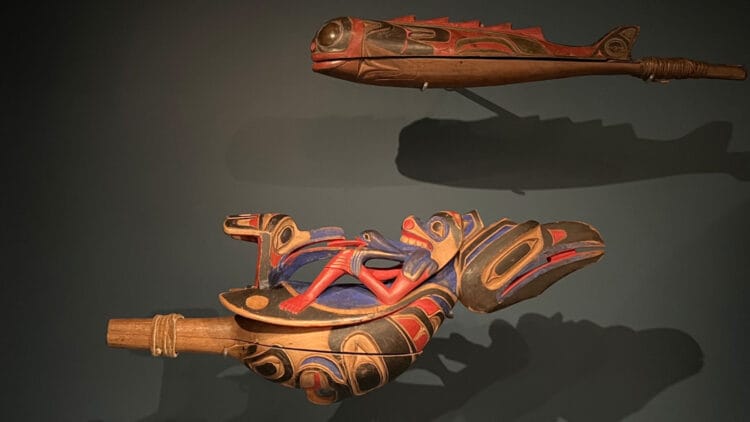
The museum has a surprisingly large collection of items from the Northwest Coast of North America, including two historic totem poles from First Nations in British Columbia and many ceremonial regalia items.
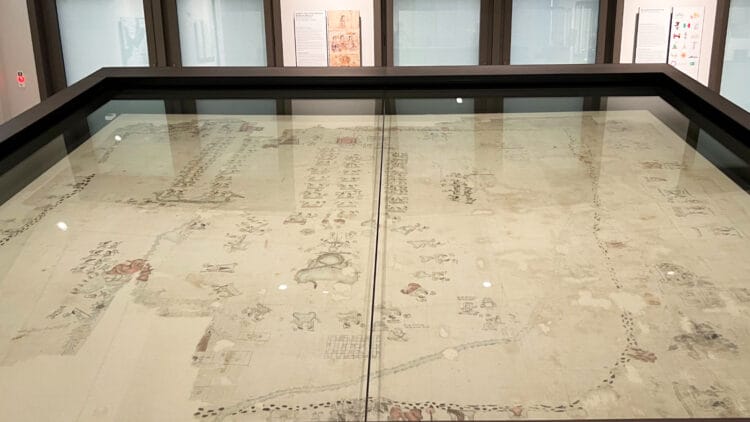
The museum has displays on the ball game, religion, and pre-Columbian items. One of the most impressive is the Lienzo Seler / Coixtlahuaca II — a kind of map painted on cotton around 1520-56 in Oaxaca, Mexico. The approximately 16 m² (172 sq ft) cotton cloth measuring 383 cm by 442 cm (12.6 × 14.5 ft) is extremely rare and well-preserved. It is only revealed for 16 minutes at the start of each hour.
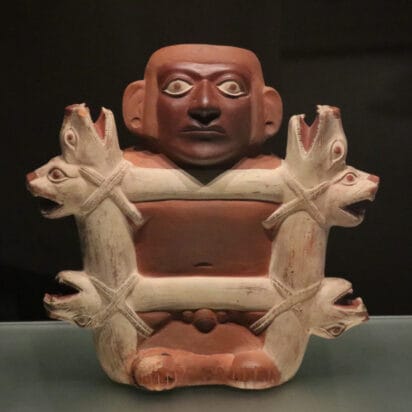
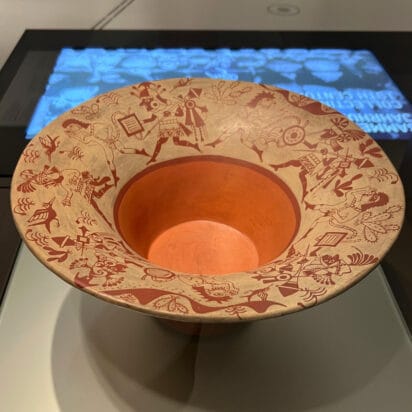
Pottery from South America includes items from Peru, made between 0 and 600 AD, that survived in amazingly good condition.
Further rare artifacts from the Americas include a featherwork Madonna from Mexico (late 18th century), a cacique of the Quimbaya people (Colombia, 500-700 AD), and pre-Columbian stone figures from Mexico and Guatemala.
- Looking for the famous Mexican feathered headdress, the Penacho de Moctezuma? It is not in Berlin but rather in the Weltmuseum Wien (World Museum of Ethnology in Vienna, Austria).
Africa in the Ethnological Museum in Berlin
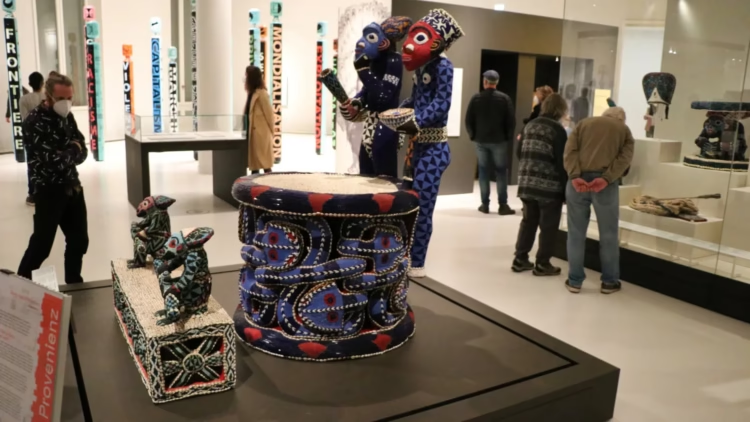
The highlights of the Ethnological Museum’s Africa collection displays are the Benin Bronzes, Woodcarvings from Cameroon, and the Schaumagazin Afrika (Open Storage Africa)
Benin Bronzes in Berlin
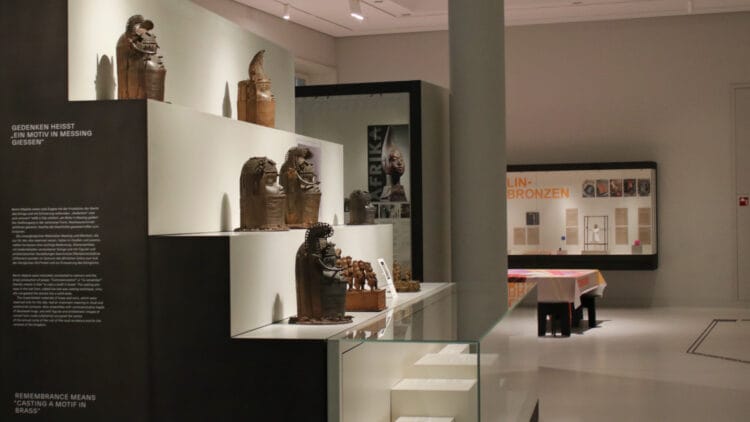
The Benin Bronzes are not only a highlight of the Ethnological Museum but one of the top collections to see in any museum in Berlin. The Staatliche Museen zu Berlin decided in 2022 to return 512 Benin bronze items to Nigeria, but many items remained in Berlin on long-term loan.
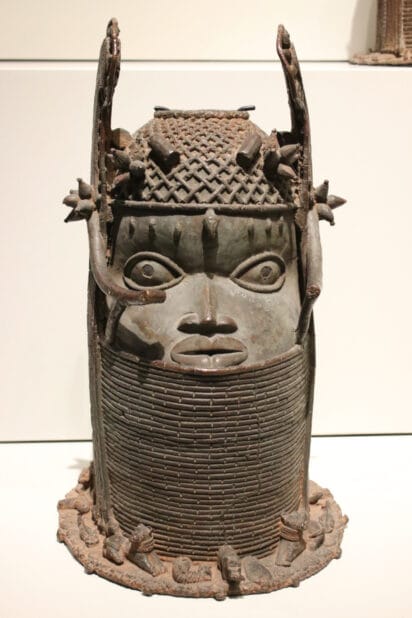
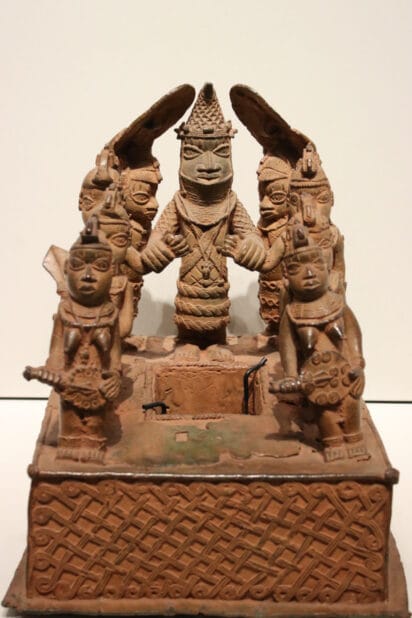
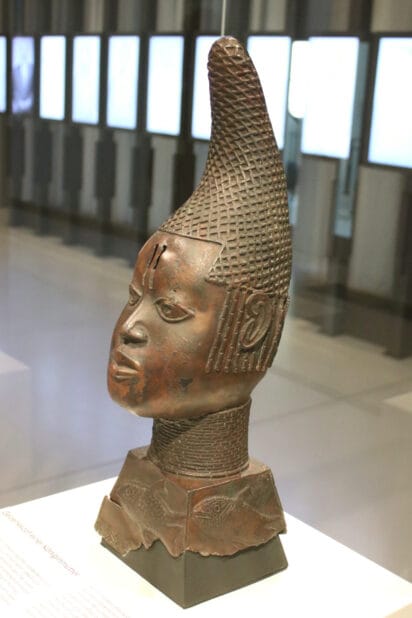
Two rooms in the Humboldt Forum are dedicated to art from the Kingdom of Benin and its history (now mostly in modern Nigeria). The commemorative head of a queen mother or iyoba, a highlight of the art of courtly Benin, is the central object in the first room.
For the second room, some 30 historical objects illustrate the full range of Benin’s courtly art. They are juxtaposed with contemporary art from Nigeria that still employs traditional techniques.
- See also the Weltmuseum Wien (World Museum of Ethnology in Vienna, Austria) for a very impressive display of Benin Bronzes.
Cameroon
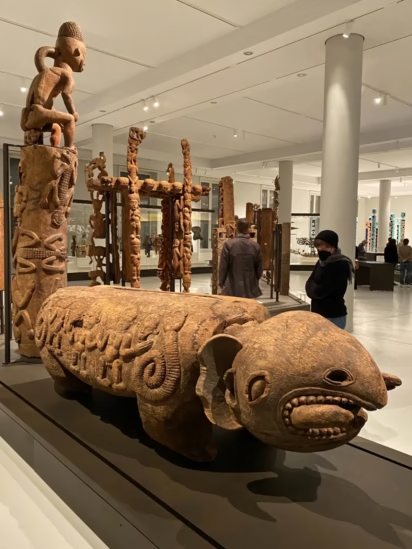
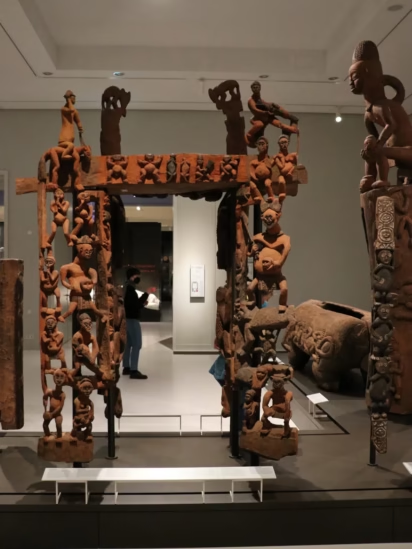
Wood-carved items are a major attraction of the Cameroon hall. Huge wooden drums are impressive, but so are the wood-carved door frames and other architectural details. Further displays include royal thrones and commemorative items used in a variety of ceremonies.
(Kamerun was a German colony from 1884 to the First World War.)
Schaumagazin Africa
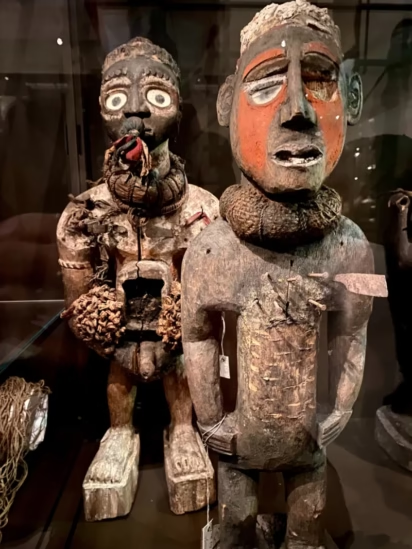
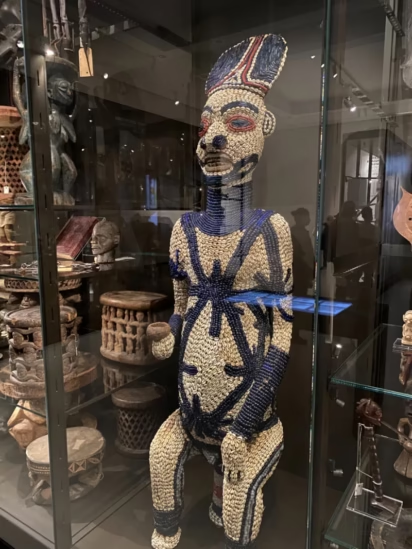
Items such as wooden statues and masks from especially West Africa are exhibited here as if in a museum warehouse. The upside is that many items could be displayed; the downside is that descriptions are cryptic and often only include the region of origin. A few similar showcases are used elsewhere in the museum, too.
Oceania in the Ethnologisches Museum Berlin
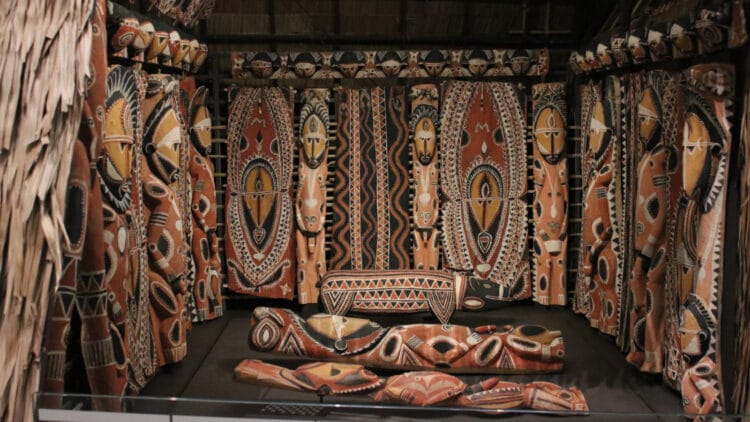
The highlights in the Oceania section, which mostly deal with the smaller islands in the Pacific Ocean, are large wooden boats, rituals and beliefs, and the reconstruction of entire buildings:
Oceania – People and the Sea
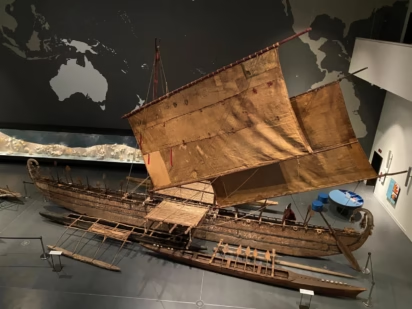
The large outrigger boat from the island of Luf (Bismarck Archipelago, Papua New Guinea) is one of the Ethnological Museum highlights. The museum acquired it in 1903, around a decade after its construction. It was placed in its current position already during the construction of the Humboldt Forum, as it would not have been possible to move it in one piece after completion of the Schloss.
This room has a further six boats collected from various parts of the Pacific Ocean, including a further large outrigger from Santa Cruz in the Solomon Islands.
One fascinating unanswered question is how the peoples of Oceania managed to navigate vast stretches of ocean in such small vessels. Much of this knowledge was lost after the introduction of modern navigation methods. A sad loss for humanity — current research is still unable to reproduce these skills.
Oceania: Rituals and Beliefs
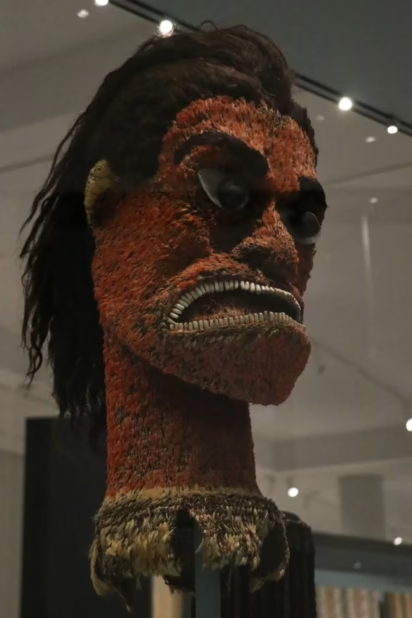
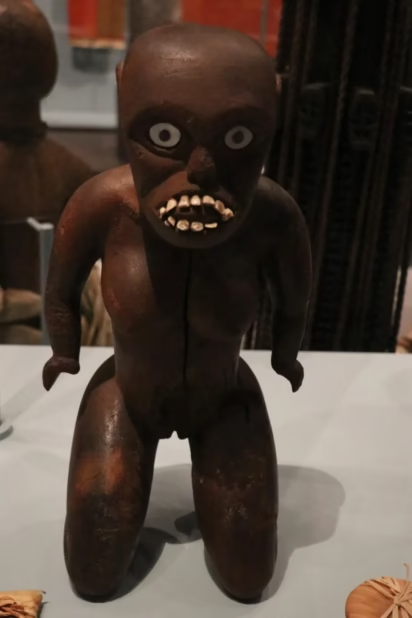
A variety of items used especially in religious rituals are on display from the larger Oceania area, including from Hawaii. A top attraction here is the ‘Ahu ‘ula Feather Coat that Hawaiian king Kamehameha III gave to Prussian King Friedrich Wilhelm III in 1828.
Buildings from Oceania
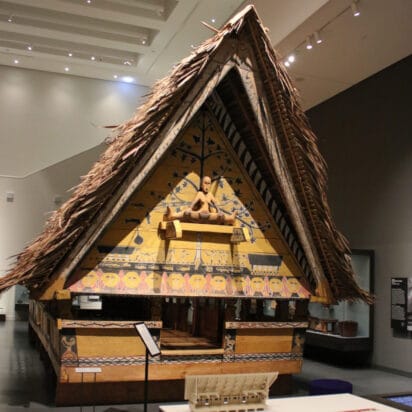
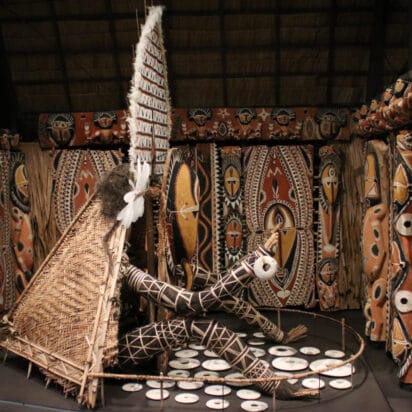
The museum displays several large wooden buildings reconstructed, sometimes in reduced form, from Palau and Papua New Guinea. The bai, a Palau meeting house, is particularly impressive with two rooms illustrating aspects of initiation ceremonies.
Sounds of the World
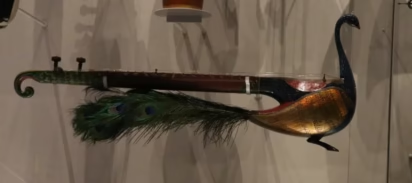
Not much to see here — in this space, visitors are invited to relax and simply enjoy sounds from all over the world being played automatically. (A few video screens are available, but the emphasis here is on the audio.)
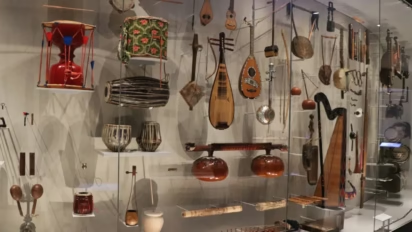
Many interesting instruments from all over the world are displayed on the outside of the sound space — the instruments from the Indian region are particularly interesting and colorful. (For more traditional European instruments, visit the magnificent Musical Instruments Museum in the Kulturforum area.)
Ethnological Museum Berlin Visitor Information

Tickets for the Ethnology Museum in Berlin
The Ethnologisches Museum (Ethnology Museum) and the Museum für Asiatische Kunst (Asian Art Museum) are seen on a combination ticket, or use the three-day Berlin Museum Pass. (Museum Island passes are not valid).
Tickets for both the Asian Art and Ethnological Museums are €9 — separate tickets are not sold for the individual museums. Tickets include temporary exhibitions on the 2nd and 3rd floors of the Humboldt Forum.
From 13 July 2026, day tickets for the Humboldt Forum are no longer used. The various museums and major exhibitions will use separate admission tickets.
Admission is free for children under 18, and discounts are offered to students.
Although both the Ethnological and Asian Art Museums are part of the Staatliche Museen zu Berlin, admission is not included in the Museum Island day ticket or Welcome Card +Museum Island, but discounts are given on the standard Berlin Welcome Card.
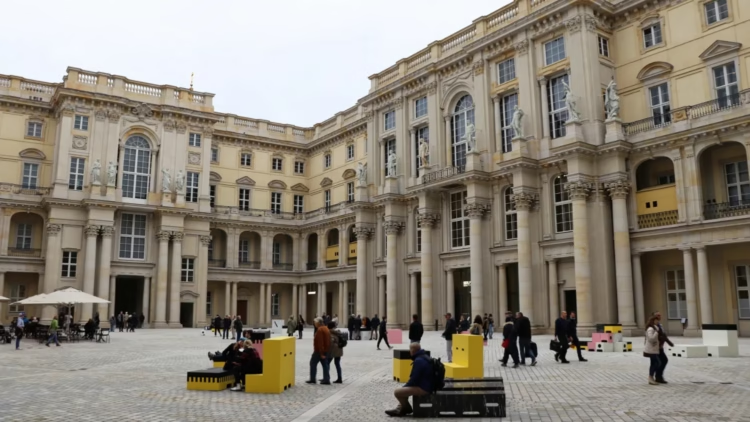
Admission to the Humboldt Forum building, including the impressive Schlüterhof courtyard, and to some of the smaller exhibitions is free.
The food and café options at the Humboldt Forum are significantly better than at other top sights in Berlin and are worth visiting even if not going to a museum.
Opening Hours of Humboldt Forum Museums
The Ethnological and Asian Art Museums follow the opening hours of the Humboldt Forum and not the other Museum Island SMB museums.
Opening hours of the museums are 10:30 to 18:30 — Wednesday to Monday. Parts of the building stay open much later, with many evening events starting at 19:00.
Note that the Humboldt Forum museums are closed on Tuesday but open on Monday.
Ethnological Museum in the Humboldt Forum in Berlin

The Humboldt Forum is the rebuilt Berlin Palace (Berliner Schloss) of the Prussian kings. The exterior was largely reconstructed according to the appearance of the original Baroque palace that was destroyed by the East German regime after the Second World War. The interior is modern, but the rooms are palatial, and the size of the museum often surprises visitors.
The Humboldt Forum is on the southern side of Berlin’s popular Museumsinsel across the square from the Altes Museum and the Berlin Cathedral.
The easiest public transportation options are the U-Bahn U5, or buses 100 and 300 to U Museumsinsel. (Lustgarten is no longer used as the bus stop name.)
More on the Berlin State Museums (Staatliche Museen zu Berlin):
Berlin State Museum Basics:
- Top National Museums and Galleries (brief overview)
- Berlin State Museums: What Is Seen Where?
- Opening Hours (2026)
- News & Special Exhibitions
- Ticket Prices (Buy online from GetYourGuide or SMB)
- Save with the Berlin Museum Pass & Berlin Welcome Cards
- Staatliche Museen zu Berlin (official website in German & English)