The Staatliche Museen zu Berlin (Berlin State Museums) are amongst the top cultural collections and art galleries in the world. The collections cover a wide spectrum of topics and include artifacts and art of astonishing quality from all corners of the globe.

Most of Berlin’s State Museums are located either on Museum Island in the heart of Berlin-Mitte or in the Kulturforum near Potsdamer Platz to the south of Tiergarten. Further major museums are the Hamburger Bahnhof (Contemporary Art) near the main train station and smaller museums near Schloss Charlottenburg Palace and in Dahlem.
The Pergamon Museum (closed until 2027) and Neues Museum are traditionally the most popular state museums in Berlin, while the Neue Nationalgalerie is the most visited art gallery.
Jump to:
State Museums on Museumsinsel in Berlin Mitte
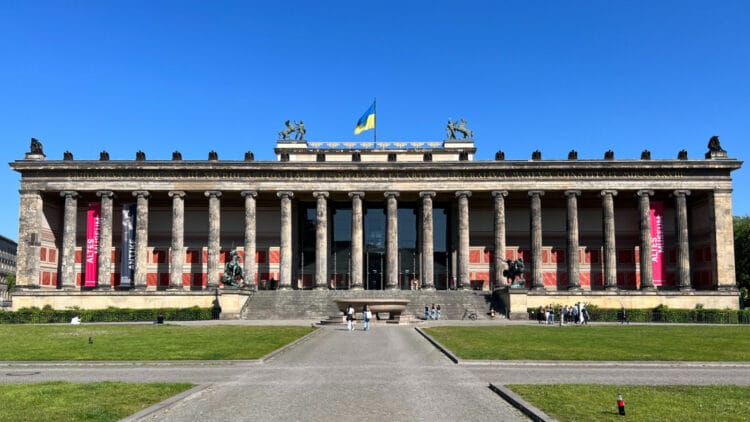
Berlin’s Museum Island is a UNESCO World Heritage site and houses some of the most popular museums in Berlin. The best museums here were built between 1830 and 1930, but were heavily damaged during the Second World War. Since 1990, all have been restored, but work continues, and further buildings are being added to make Museum Island Berlin the largest museum complex in Europe.
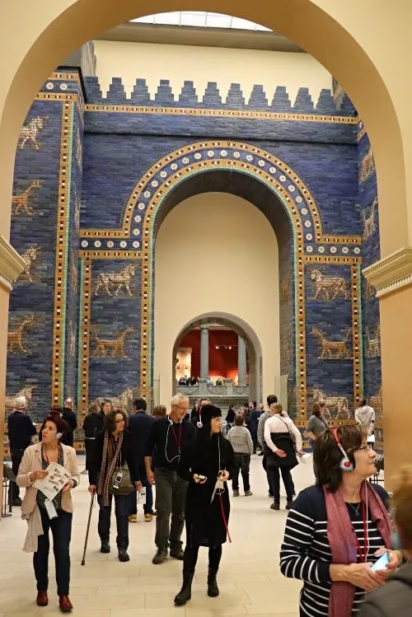
Most state museums on this island in the Spree River focus on antiquities. However, the Alte Nationalgalerie (Old National Gallery) displays 19th-century European art, while the Ethnological and Asian Art collections are in the rebuilt Berliner Schloss, now the Humboldt Forum.
Museum buildings on Museum Island include:
- The Pergamon Museum, traditionally the most popular museum in Berlin, is closed until 2027, but some sculptures may be seen in the Panorama exhibition. It encompasses the Collection of Classical Antiquities, the Museum of Islamic Art, and the Museum of Ancient Near Eastern Art.
- The Neues (New) Museum houses the Egyptian Museum and the Museum of Pre- and Early History. Its top attraction is the bust of Queen Nefertiti, the most famous Egyptian artwork in Germany.
- The Altes (Old) Museum exhibits a large part of Berlin’s famed Antikensammlung (Collection of Classical Antiquities) and part of the Numismatic Collection.
- The James-Simon-Gallerie is the central entrance to many museums and is also used for temporary exhibitions.
- The Bode Museum houses the Collection of Sculptures (Middle Ages to 18th century), the Museum of Byzantine Art, and most of the Numismatic Collection.
- The Alte Nationalgalerie (Old National Gallery) displays mostly 19th-century European art.
- The Friedrichswerdersche Kirche (Church) is close to Museumsinsel and exhibits mostly 19th-century sculptures.
- The Humboldt Forum with the Ethnology Museum and Asian Art Museum in the rebuilt Berliner Schloss is, of course, also on Museum Island, but it is managed separately with different tickets and opening hours.
Museum Island Berlin Tickets and Passes
The Museum Island Berlin museums include for tickets and hours the following museums:
- Pergamon Museum
- Pergamonmuseum. Das Panorama Exhibition
- Neues Museum (New Museum)
- Altes Museum (Old Museum)
- Bode Museum
- Alte National Galerie (Old National Gallery)
- Friedrichswerdersche Kirche (just off Museum Island)
It is possible to buy entry tickets for individual museums online (or directly at the museums), but if you visit two museums on the same day, the Museum Island day ticket is cheaper. The Welcome Card + Museuminsel covers the Museum Island museum and transportation for 72 h, while the Museum Pass Berlin gives admission to all these museums, the Humboldt Forum, and over 30 Berlin museums for three days.
The Asian Art Museum and Ethnological Museum are on Museum Island but follow the opening hours and ticket regime of the Humboldt Forum (Berliner Schloss). These museums are not included in Museum Island tickets and passes. [Note: open on Mondays but closed on Tuesdays!]
Pergamonmuseum / Pergamon Museum
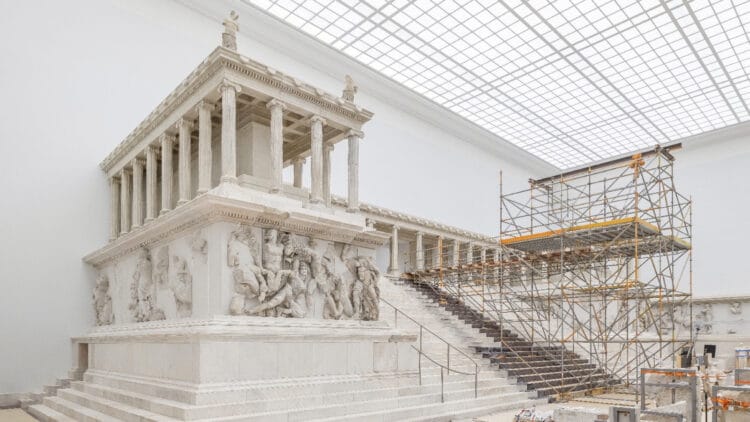
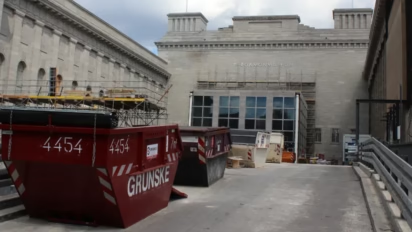
The Pergamon Museum, traditionally the most popular museum in Berlin, is still closed for renovation.
Some galleries, including the Hellenic Halls, the famous Pergamon Altar, and the Museum of Islamic Art, will reopen on 4 June 2027 in the north wing, while the rest may be closed until the mid-2030s.
Some statues from the Pergamon Altar may be seen in the temporary and separate Panorama Exhibition. This exhibition includes a huge Asisi panorama painting, which brings the famous Pergamon Altar into context.
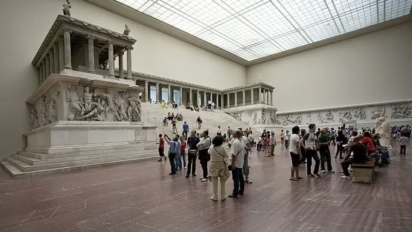
The Pergamon Museum, originally completed in 1930, is most famous for the reconstructions of large archaeological structures: the Pergamon Altar from a Greek temple, the Market Gate of Miletus, the Ishtar Gate and Processional Way from Babylon, and the Mshatta Façade.
The main collections in the Pergamon Museum are:
- Antikensammlung – a large part of the collection of classical antiquities (rest in the Altes Museum and Neues Museum)
- Vorderasiatisches Museum – Museum of the Ancient Near East
- Museum für Islamische Kunst – Islamic Art from the 7th to 19th centuries.
Neues Museum / New Museum
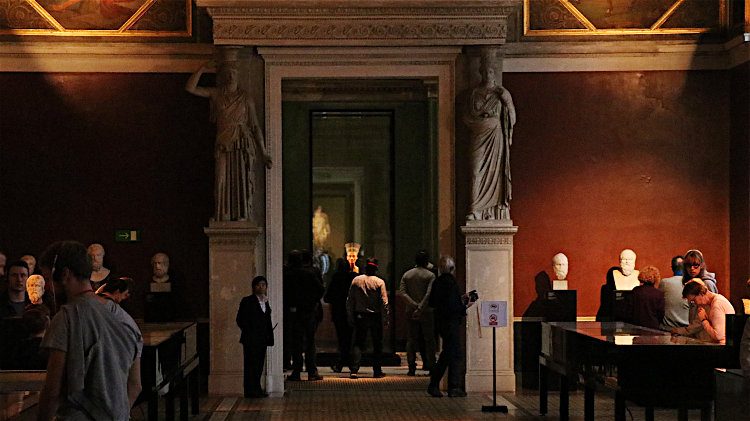
The Neues Museum is in a mid-19th-century building by Friedrich August Stüler, but was seriously damaged during the Second World War.
Ironically, the New Museum now houses a collection even older than the antiquities in the Old Museum:
- Ägyptischen Museum und Papyrussammlung – Egyptian Museum, including the bust of Queen Nefertiti, and a large papyrus collection.
- Museum für Vor- und Frühgeschichte – prehistoric and early historic objects from all parts of the Old World.
- Antikensammlung – a small part of the antiquities collection, especially works from Roman provinces.
The Neues Museum traditionally competes with the Pergamon as the most-visited top museum in Berlin. Time-slot tickets are sometimes required during peak periods or popular exhibitions.
Entrance to the Neues Museum is either through the Simon James Gallery or from the older entrance across the square from the Alte Nationalgalerie.
Altes Museum / Old Museum

The Altes Museum is a neoclassical building with an impressive 18 Ionic column facade designed by Karl Friedrich Schinkel in the 1820s. Many of these columns still show the scars of gunfire in the Second World War. It is on the open Lustgarten square together with the Berliner Dom and the Schloss.
The Altes Museum now houses the:
- Antikensammlung – the largest part of the antiquities collection with art from the Greeks, Etruscans, and Romans. (The rest of the collection is in the Pergamon and Neues Museum.)
- Münzkabinett (Numismatic Collection) – ancient minting (the rest of the collection is in the Bode Museum).
Alte Nationalgalerie / Old National Gallery

The Alte Nationalgalerie was the third museum on the island and opened in a neo-classical temple-like building in 1876. It is still the spiritual home of the national art collection, although the collection is now so large that several buildings in Berlin are used to display the paintings and sculptures (see also Kulturforum).
The collection in the Alte Nationalgalerie:
- Mostly 19th-century paintings and sculptures. Around 400 paintings and 100 sculptures are on display from the late 18th to early 20th centuries.
Popular temporary exhibitions often require time slot reservations to enter the museum.
Bode Museum
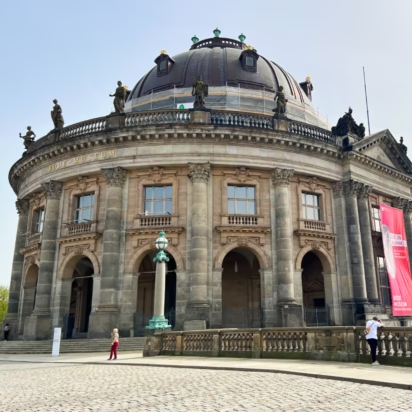
The Bode Museum opened in 1904 as the Kaiser Friedrich Museum but is now known after its original curator. The building was seriously damaged during the Second World War and only reopened in 2006. It is often a very quiet museum and a pleasure to visit when other museums in Berlin are crowded.
The Bode Museum houses the:
- Skulpturensammlung – 1,700 sculptures from the Middle Ages to the late 18th century, enhanced by 150 paintings from the Gemäldeglerie.
- Museum für Byzantinische Kunst – Museum of Byzantine Art from late antiquity to early Middle Ages.
- Münzkabinett (Numismatic Collection) – one of the largest collections of coins, seals, and medallions in the world.
Tip: Even if not planning to visit the museum, enter to see for free the palatial staircase, cupola, equestrian statue, and visit the beautiful cafe.
Friedrichswerdersche Kirche / Friedrichswerder Church

A contemporary of the Altes Museum and also designed by Schinkel, the Neo-Gothic Friedrichswerdersche Kirche was the first large brick building built in Germany since the Middle Ages.
The church is used by the Nationalgalerie to exhibit part of its collection of 19th-century sculptures – covering the period from Schinkel to the end of the Kaiserreich (ca. 1789 – 1918).
The church is just off Museumsinsel across the Spree Canal from the Berliner Schloss. It is a small museum, but absolutely worth half an hour when passing by with a Museum Island day ticket in your pocket.
Humboldt Forum in Berliner Schloss on Museum Island
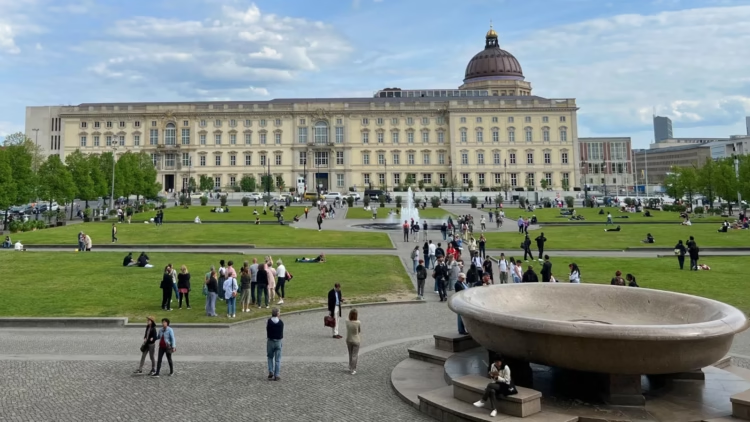
The Humboldt Forum in the rebuilt Berlin Schloss on Museum Island reopened in 2020. The Stadtmuseum Berlin (local history), Humboldt University, and other institutions have temporary exhibition rooms here, while the two large SMB museums in the Berliner Schloss are:
- The Etnologisches Museum / Ethnological Museum has an enormous collection of artworks and cultural objects from outside Europe. The focus points are African art, American archaeology, items from the South Seas, and Islamic culture.
- The Museum für Asiatische Kunst / Asian Art Museum has one of the most important collections in Europe of Asian art from the 3rd century to the present. The main focus is on art from the Indian subcontinent, Japan, Korea, and China.
Admission is no longer free, and both museums follow the opening hours and ticket system of the Humboldt Forum (closed on Tuesdays, open on Mondays). They are not included in the Museum Island Berlin passes but are covered by the Museums Pass Berlin.
Kulturforum State Museums in Berlin Tiergarten

The Kulturforum / Cultural Forum is a collection of purpose-built museums and cultural centers. The focus is on world-class collections of European art. The Kulturforum Day Ticket covers all the museums here and is usually cheaper than two individual museum or exhibition tickets.
- The Gemäldegallerie (Picture Gallery) displays an astonishing collection of European Old Masters paintings from the 13th to 18th centuries, including 16 works by Rembrandt and a fantastic Italian Renaissance section. It is one of the greatest art collections in the world.
- The Neue Nationalgalerie (New National Gallery) has 20th-century European paintings and sculptures mostly from before 1970.
- The Kunstgewerbemuseum (Decorative Arts) has a high-quality collection of items ranging from the Middle Ages to the present.
- The Musikinstrumenten-Museum (Museum of Musical Instruments) displays over 800 musical instruments.
- Special exhibitions by the Kupferstichkabinett (Museum of Prints and Drawings) and the Kunstbibliothek (Art Library).
Most buildings at Kulturforum were erected during the Cold War, at a time when the reunification of Germany seemed impossible. In addition to the Staatliche Museen zu Berlin buildings, the area is also home to the Berliner Philharmonie.
Gemäldegalerie / Paintings Gallery

The contract for the building of the Gemäldegalerie was awarded only three years before the fall of the Berlin Wall. By the time the modern building was finished, the divided collections could be united, leaving the Gemäldegalerie with one of the most important collections of European Old Masters art in the world.
- The paintings on display in the Gemäldegalerie are mostly European art from the 13th to 18th centuries. The main focus points are German and Italian art from the 13th to 16th centuries and Dutch art from the 15th to 17th centuries (including 16 works by Rembrandt and two Vermeers).
Neue Nationalgalerie / New National Gallery

The Neue Nationalgalerie opened in 1968 as the last building designed by Mies van der Rohe. The Neue Nationalgalerie is used for major exhibitions of modern art from the early 20th century to around the 1960s, although the current main exhibition covers the period 1945 to 2000.
(Contemporary art is in the Hamburger Bahnhof, while a new large museum for 20th-century modern art is under construction next to the Neue Nationalgalerie.)
Kupferstichkabinett / Museum of Prints and Drawings
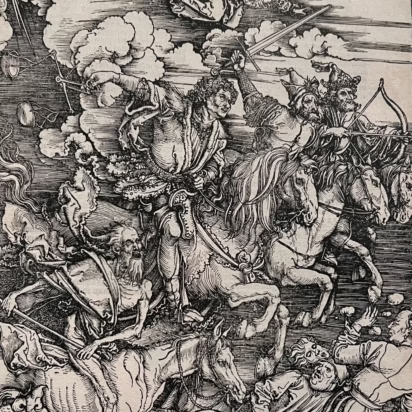
The Kupferstichkabinett Berlin is the largest collection of prints and drawings in Germany and the fourth largest in the world. The collection of 550,000 prints and 100,000 drawings spans a thousand years and ranges from Andy Warhol to Dürer and illuminated manuscripts.
Visitors enjoy frequently changing temporary exhibitions and the possibility of requesting viewings of specific works.
Kunstbibliothek / Art Library
This huge library of around 350,000 volumes of art and cultural works is a major research center. It has occasional special exhibitions in the main Kulturforum.
Kunstgewerbemuseum / Museum of Decorative Arts
The Kunstgewerbemuseum displays decorative arts from the early Middle Ages to the present, a large collection of clothes from the 18th century to the present, designer furniture, and parts of the magnificent Welfenschatz (Guelph Treasure).
Musikinstrumenten-Museum / Musical Instruments
The Musikinstrumenten-Museum (Museum of Musical Instruments) is not a state museum, but it is absolutely worth seeing and is included in the Kulturforum ticket. Around 800 musical instruments are on display, including a working Wurlitzer theater organ.
Hamburger Bahnhof near the Hauptbahnhof in Berlin
Hamburger Bahnhof – Nationalgalerie der Gegenwart – Berlin

The very popular Hamburger Bahnhof – Nationalgalerie der Gegenwart – Berlin is one of the largest contemporary art museums in the world. The former station was already converted into a museum in 1916, but the name stuck.
The Hamburger Bahnhof displays contemporary art from the 1970s to the present. It is only two blocks from the new Berlin Hauptbahnhof. It stages a variety of temporary exhibitions every year in the physically very large complex.
Smaller State Museums in Berlin Suburbs
Charlottenburg Dahlem was the center of West Berlin’s museums, but since the reunification of Berlin, these areas have lost most of their top collections to Museum Island. The remaining museums are small but have some top-quality specialized collections.
Berlin State Museums in Charlottenburg
Two art galleries, just outside Charlottenburg Palace, are part of the National Gallery. Both are mostly based on specialized, originally private collections:
- The Scharf-Gerstenberg Collection focuses on surrealism with works by, amongst others, Goya, Dalí, and Max Ernst
- The Museum Berggruen (closed until probably 2027) displays classical modern works. At the heart of the permanent exhibition are over 100 works by Pablo Picasso and 20 by Henri Matisse.
Museum für Fotografie / Photography Museum
The Museum für Fotografie / Photography Museum has a permanent exhibition of Helmut Newton’s works and large temporary exhibitions of photos owned by various other museums. This museum is to the west of the Zoologischer Bahnhof station.
State Museums in Berlin Dahlem – Museen Dahlem
Only the Museum Europäischer Kulturen (European Cultures) remained in Dahlmem in southwestern Berlin. This museum focuses on everyday life from the 18th century to the present. Very few foreign visitors now make the journey here.
The more famous non-European collections moved from Dahlem to the Humboldt Forum in the rebuilt Berliner Schloss on Museum Island.
Schloss Köpenick in Southeastern Berlin
Schloss Köpenick is a Baroque palace commissioned by Friedrich I of Prussia and now used by the Museum of Decorative Arts to display European furniture and decorations from the Renaissance to Rococo. It is in the far eastern outskirts of Berlin and thus rarely visited by casual visitors to Berlin despite the high-quality exhibitions.
Berlin’s State Museums are easily reached on public transportation: the Kulturforum on bus 200 or any train to Potsdamer Platz, Museumsinsel on bus 100, bus 300, and U-Bahn U5, Charlottenburg by S-Bahn train, and Dahlem by U-Bahn train.
Berlin State Museums (Staatliche Museen zu Berlin):
- Brief Overview of the National Museums and Galleries in Berlin
- Berlin State Museums: What Is Seen Where?
- Opening Hours (2026) — closed on Monday, some on Tuesday too.
- Ticket Prices for Berlin State Museums — buy online and go directly to the entrance.
- Staatliche Museen zu Berlin (official website in German & English).
→ Archive of all Berlin State Museums posts on European Traveler.