Visit the Alte Nationalgalerie on Berlin’s Museum Island to see Germany’s finest collection of 19th-century art, including masterpieces by Caspar David Friedrich, Adolph Menzel, Max Liebermann, Manet, Monet, and Rodin.
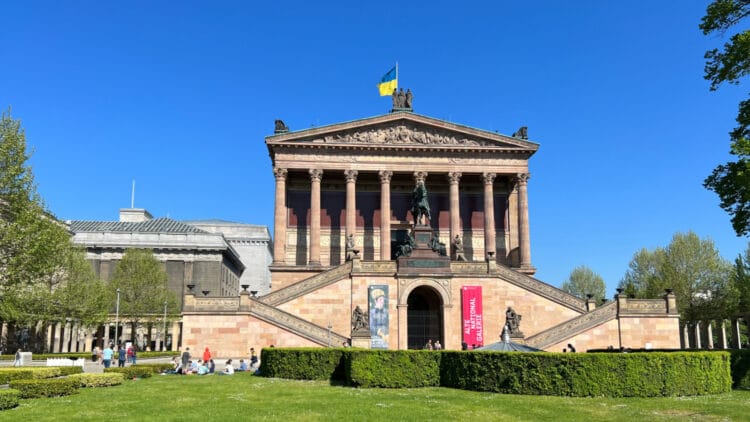
The Alte Nationalgalerie (Old National Gallery) in the shape of an antique Greek temple is one of the smaller museums on Berlin’s Museum Island. It is home to Berlin’s collection of mostly 19th-century European paintings and sculptures covering the period from the French Revolution to the First World War. The emphasis is on German artists, but the collection also includes works from artists from other European countries. The current permanent exhibition includes major works by German painters Caspar David Friedrich, Karl Friedrich Schinkel, Max Liebermann, and Adolph Menzel.
The average visitor spends around an hour in the Alte Nationalgalerie in Berlin. Buy tickets online — major exhibitions may have surcharges and require timeslot reservations. Visitors planning to see two or more Museum Island museums save money with a Museum Island Day Ticket.
Alte Nationalgalerie in Berlin: Quick Guide
📍 Location: Museum Island (Museumsinsel), Berlin
⭐ Don’t Miss:
- Monk by the Sea (Caspar David Friedrich)
- Abbey Among Oak Trees (Caspar David Friedrich)
- In the Conservatory (Édouard Manet)
- Isle of the Dead (Arnold Böcklin)
- Frederick the Great playing the flute in concert (Adolph Menzel)
- Prussian Princesses (Schadow)
⏱ Time Needed:
Around an hour (+30 min for temporary exhibitions)
🎟 Best Ticket:
Museum Island Day Ticket if visiting more than one museum.
📅 Best Time to Visit:
Weekdays at 10:00 or after 15:00
👨👩👧👦 Good For:
19th-Century German and European paintings and sculptures.
Why Visit? Berlin’s best museum for 19th-century art, including many top works by Caspar David Friedrich. Mental break from Museum Island’s vast antiquities collections.
In recent years, the Alte Nationalgalerie staged several blockbuster temporary exhibitions. Their popularity requires time-slot reservations and makes spontaneous visits to the museum more complicated, as separate tickets are not sold. As the Alte Nationalgalerie does not have much space for temporary exhibitions, works from the permanent exhibitions may be removed or displayed elsewhere in the museum.
Jump to:
Caspar David Friedrich · Romanticism · Impressionism · Realism · Sculptures · Tickets · Hours
Alte Nationalgalerie in Berlin
The artworks displayed in the Alte Nationalgalerie range from the origins of neoclassical art (Klassizismus) and romanticism (Romantik) to impressionism (Impressionismus), realism (Realismus), and Secession. Most of the works are by German artists, but the museum also has a fine collection of French impressionists and realists from various European nations.
The Nationalgalerie opened in 1876 as the third museum on Museumsinsel to display the collection of contemporary art. It was designed as a neoclassical Greek temple by Friedrich August Stüler and completed by Johann Heinrich Strack — both students of Schinkel. It suffered damage during the Second World War, but in contrast to many other buildings on the island already reopened in 1949.
Seeing Top Art in the Alte Nationalgalerie
Only around 500 of the 2000 works in the collection are on permanent display, which makes the Alte Nationalgalerie less overwhelming than many of the other huge museums in Berlin.
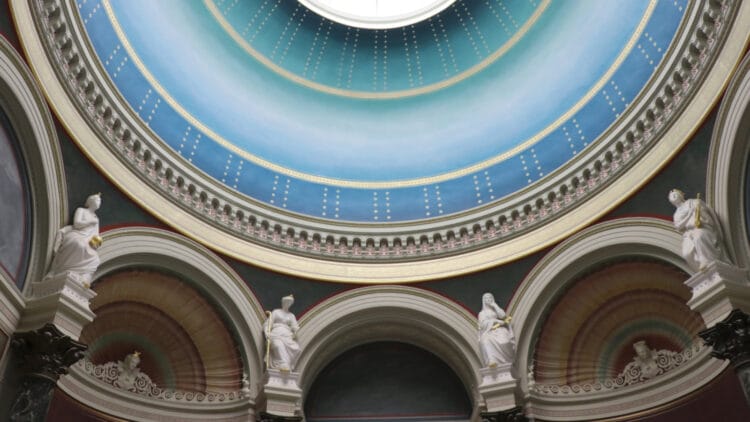
As with other 19th-century museums in Berlin, the entire building is a Gesamtkunstwerk with monumental staircases, intriguing architectural details, and eye-catching decorations.
The art collection itself is spread over three floors and best seen chronologically from the top floor down. (Keep in mind that large sections of the museum may be moved or closed for temporary exhibitions.)
Romanticism in the Alte Nationalgalerie in Berlin

The third floor covers the first half of the 19th century — often referred to as Goethezeit (Age of Goethe) and the Romantik. The most important works here, and probably in the whole museum, are by Caspar David Friedrich, but also have a peek at the works by Anton Graff and especially Karl Friedrich Schinkel.
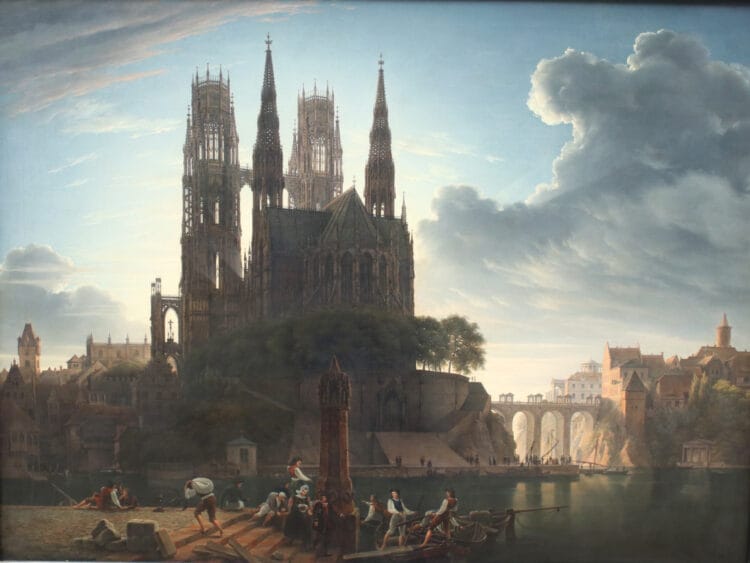
A large room is dedicated to the paintings of Karl Friedrich Schinkel. He famously designed some of the most important neoclassical buildings in Berlin, including the Neue Wache, Konzerthaus, and Altes Museum, but in his earlier fantasy paintings, high Gothic dominated. The Gothic was distinctly out of fashion during much of the 19th century before it was re-invented as the most German of styles around the time of German unification in 1871.
Caspar David Friedrich Paintings in the Alte Nationalgalerie
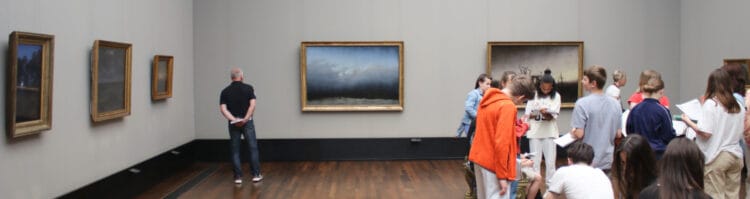
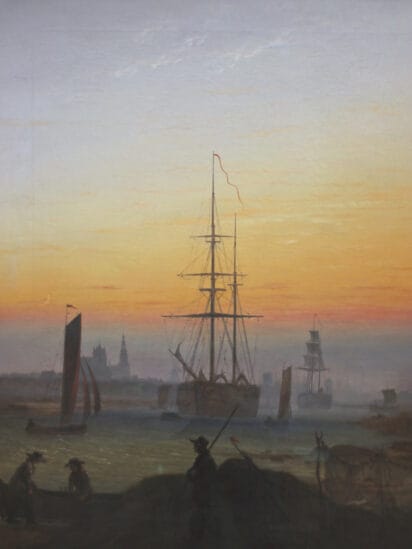
However, Caspar David Friedrich is the clear highlight on the top floor. He is arguably the most celebrated German painter from the Romantic era, and the Alte Nationalgalerie has some of his finest works.
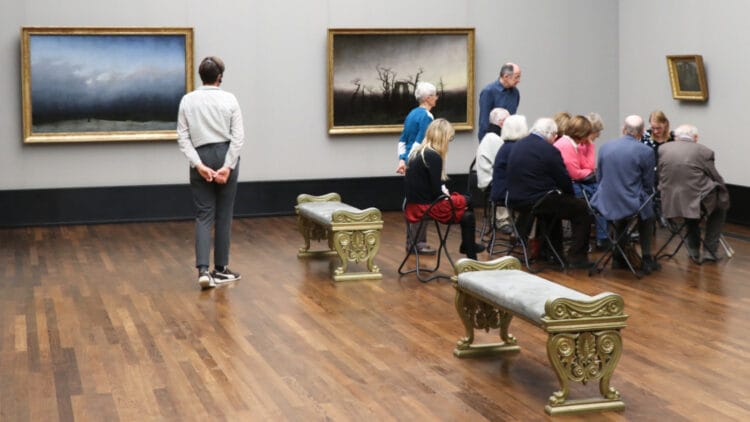
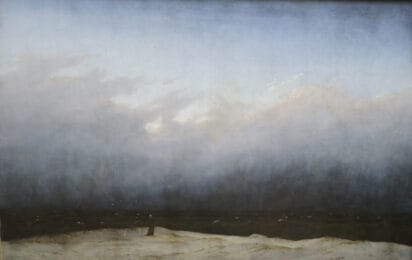
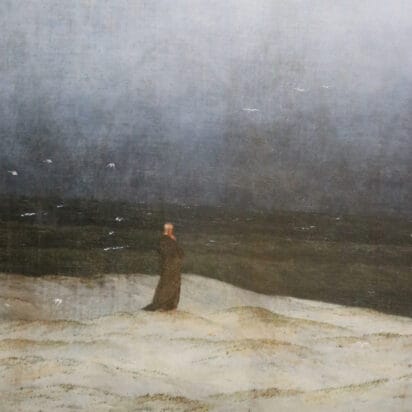
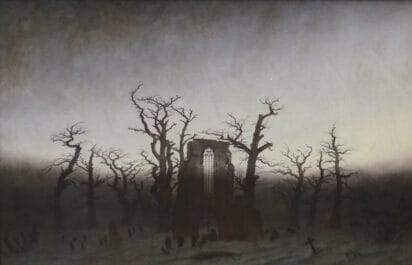
The two most famous hang side-by-side: “Mönch am Meer” (Monk by the Sea) and “Abtei im Eichwald” (Abbey Among Oak Trees). Both were exhibited in 1810 and propelled Friedrich to fame when the king of Prussia bought both. Lean in closely to see the gulls warning the monk and the birds in the window of the ruined church.
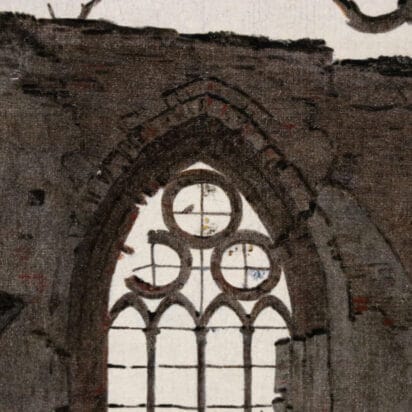
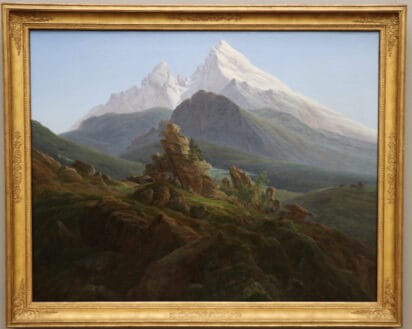
Many of Friedrich’s later paintings in the same room show how his style developed. Note “Der Watzmann,” the Alpine peak at Berchtesgaden. Friedrich never traveled south of the Harz and based the painting on the works of his pupils.

Idealism – Realism – Impressionism
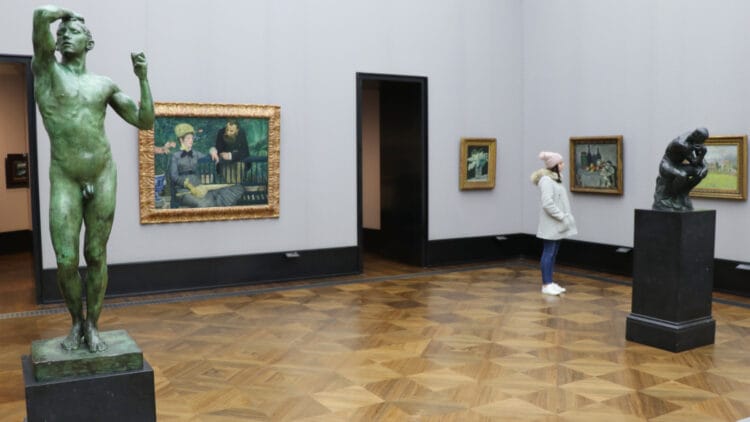
On the second floor of the Alte Nationalgalerie is the ever-popular collection of French Impressionists. Works on display include paintings by Edouard Manet, Claude Monet, Auguste Renoir, Edgar Degas, Paul Cézanne, and a few sculptures by Auguste Rodin (The Age of Bronze, The Thinker).
Manet’s “Im Wintergarten” (In the Conservatory) is generally the highest-rated of the museum’s French collection.
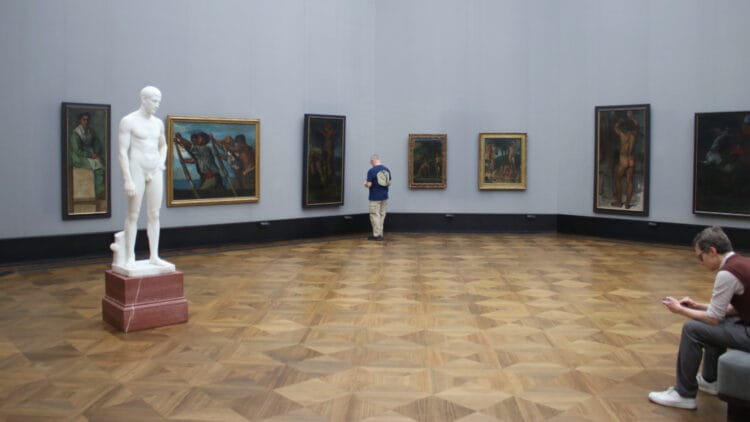
The second main hall is used for Deutschrömer (lit. German Romans, i.e., Germanic artists who worked in Italy).
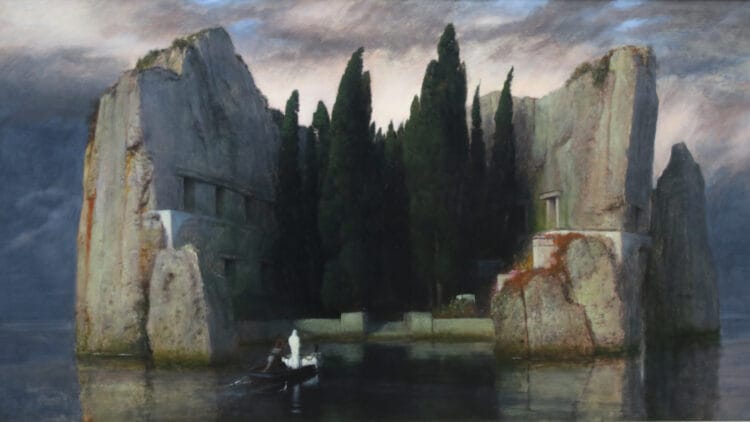
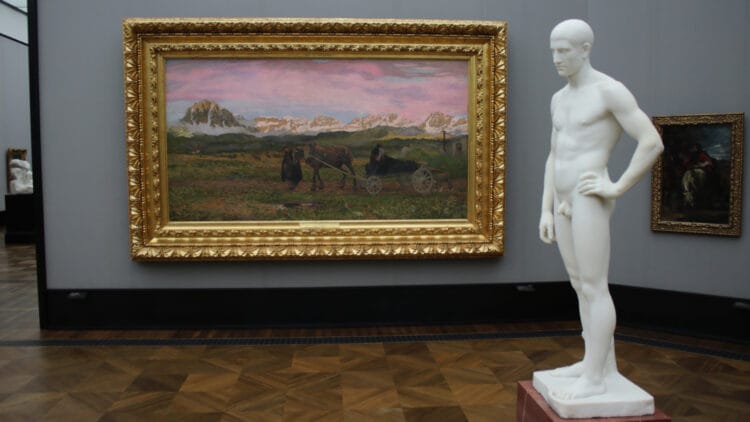
Large works on display here include the third of six versions of Arnold Böcklins “Toteninsel” (Isle of the Dead), Giovanni Segantini’s large “Rückkehr zur Heimat” (Returning Home), and paintings by Hans von Marées and Anselm Feuerbach.
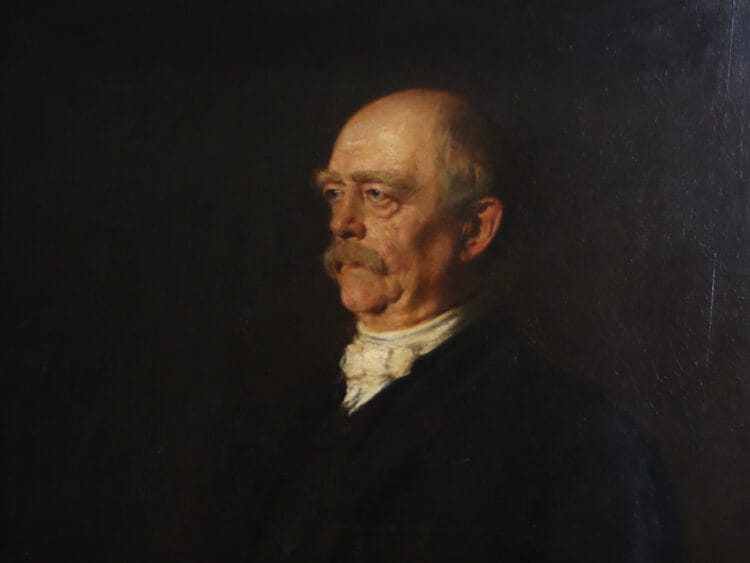
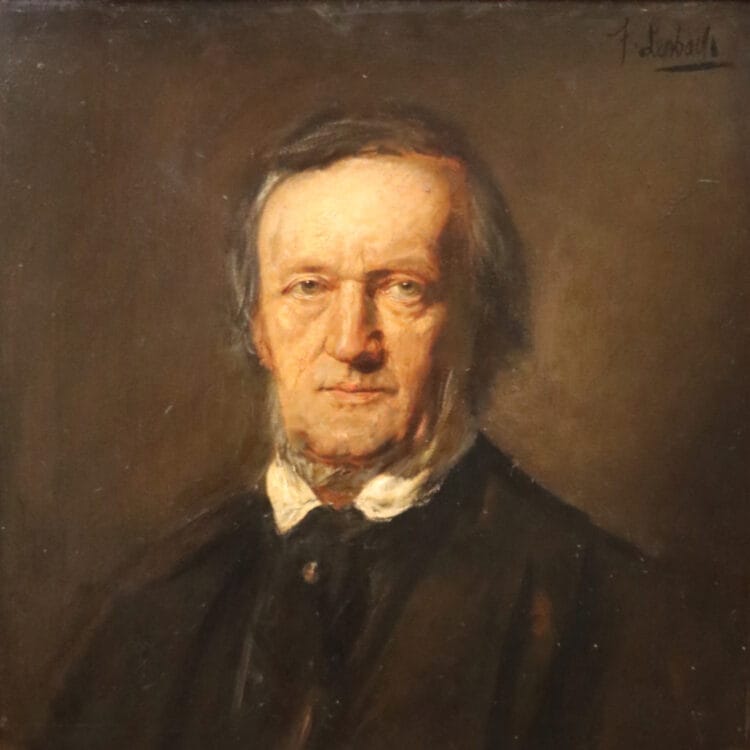
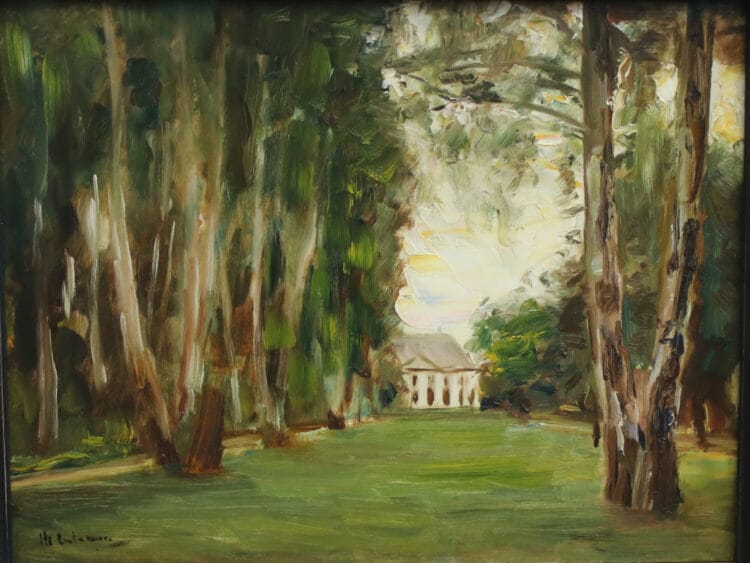
The smaller halls have mostly German realist and impressionist paintings and sculptures. Note the Franz von Lenbach paintings of Otto von Bismarck and Richard Wagner. The Alte Nationalgalerie also has a vast collection of works by Max Liebermann, arguably the most celebrated German impressionist.
Classical Sculptures & Realism
Classical sculptures and further realism paintings are on display on the ground floor of the Alte Nationalgalerie in Berlin.
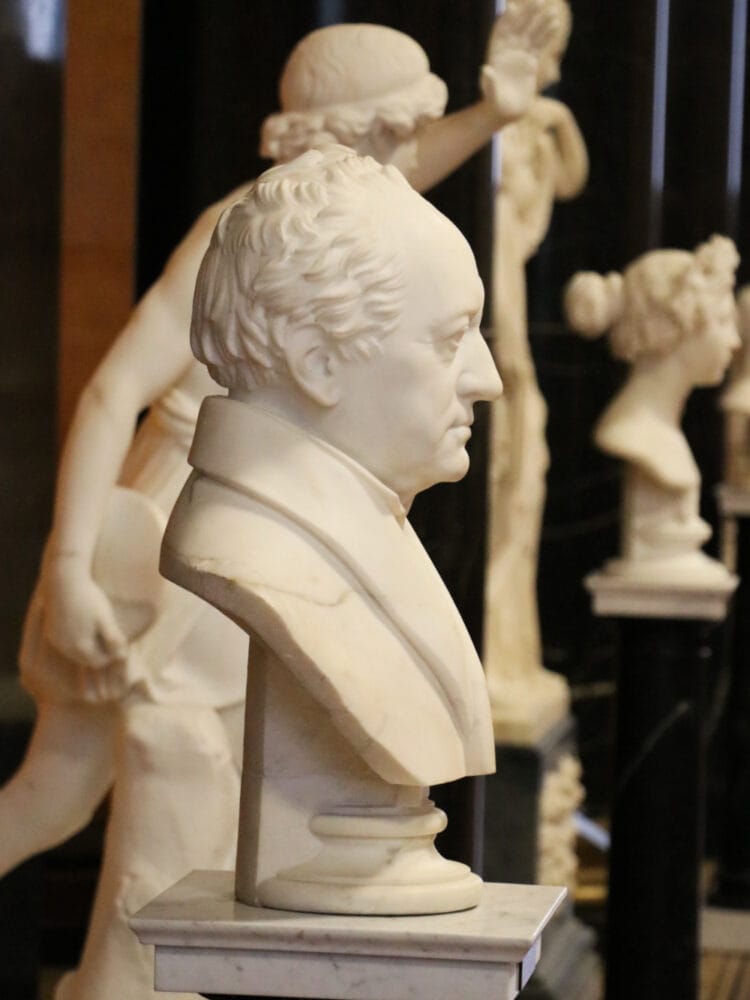
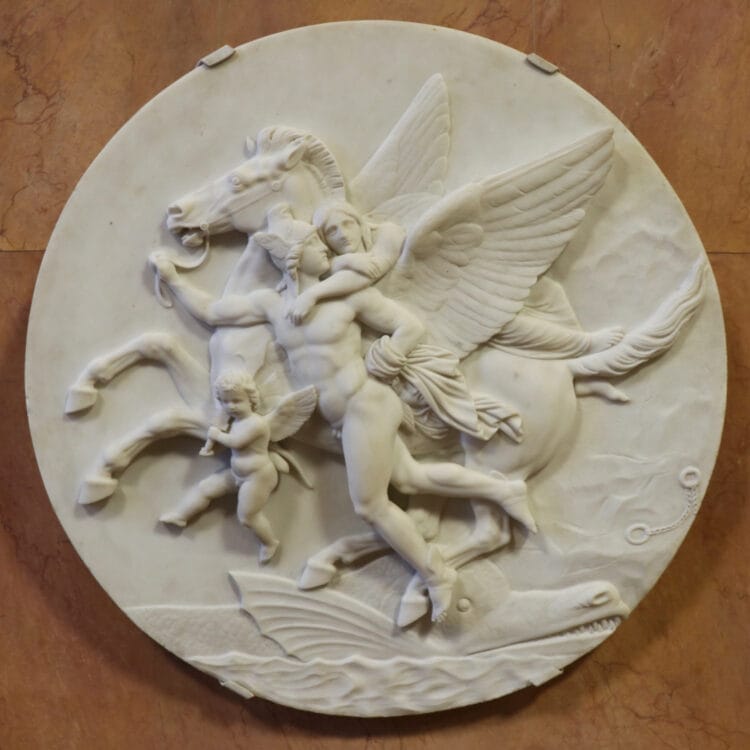
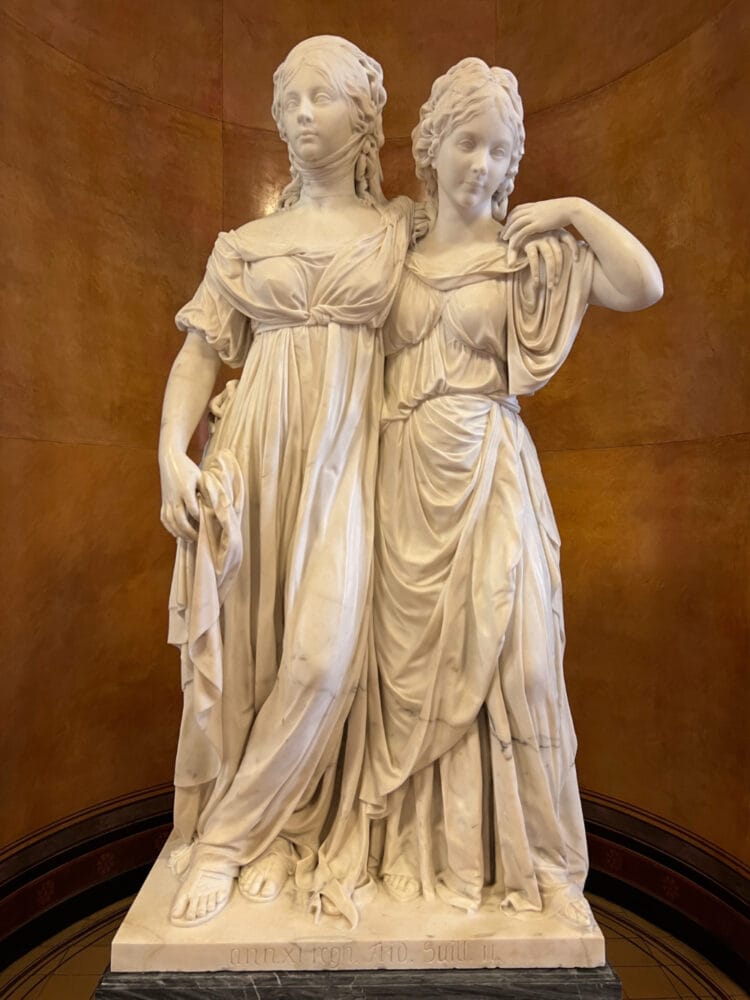
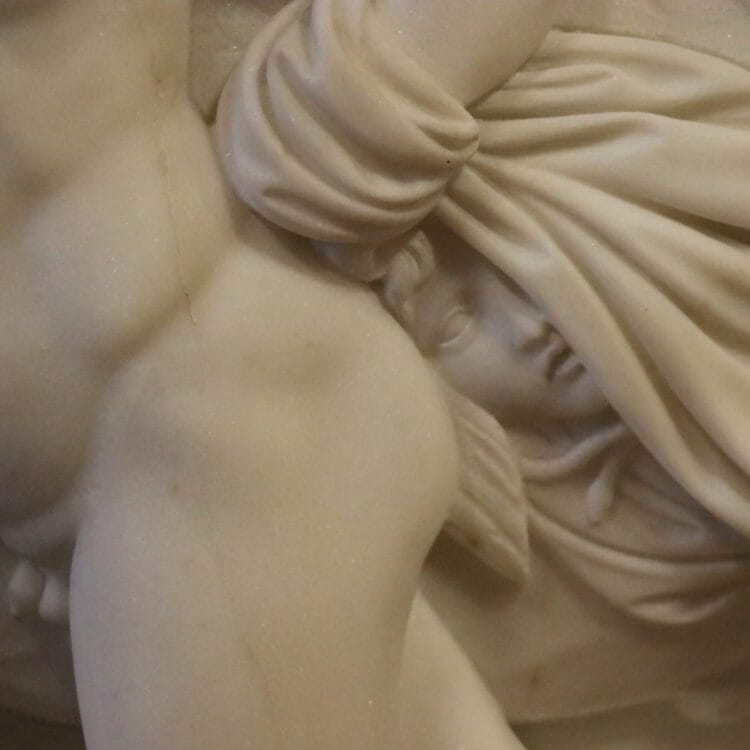
The exhibition includes a small but very high-quality collection of classical sculptures by very famous artists. Johann Gottfried Schadow’s grouping of two Prussian princesses is highly rated, but his bust of Goethe is instantly recognizable. Other sculptures are by Christian Daniel Rauch, Bertel Thorvaldsen, and Antonio Canova.
More 19th-century sculptures by artists closely associated with the Berlin school of sculpture are beautifully displayed in the Friedrichswerdersche Kirche near the Humboldt Forum (included in a Museum Island day ticket and well worth the short detour).
The smaller rooms have works by realist painters, including John Constable, Gustave Courbet, and various painters from the German-speaking world. It also has a few works from the Gründerzeit and Secession.
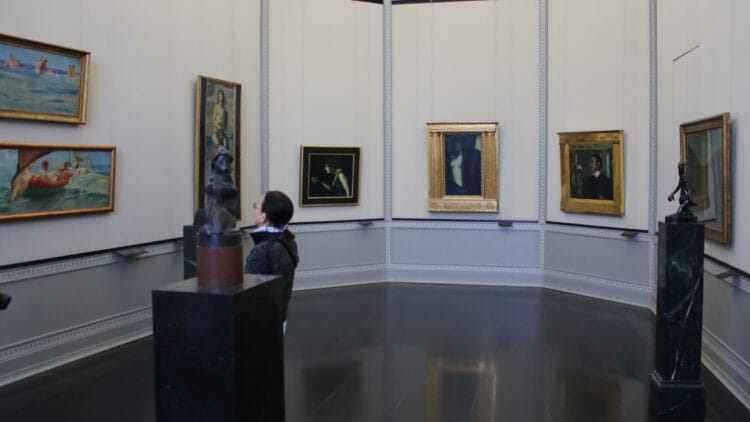
The Berlin Secession, contemporary of the more famous Vienna Secession, is represented in two small rooms on the ground floor. Works here by Dora Hitz, Lovis Corinth, and Franz von Stuck hint at the more modern art of the early 20th century, which in Berlin is usually shown in the Neue Nationalgalerie in Kulturforum.
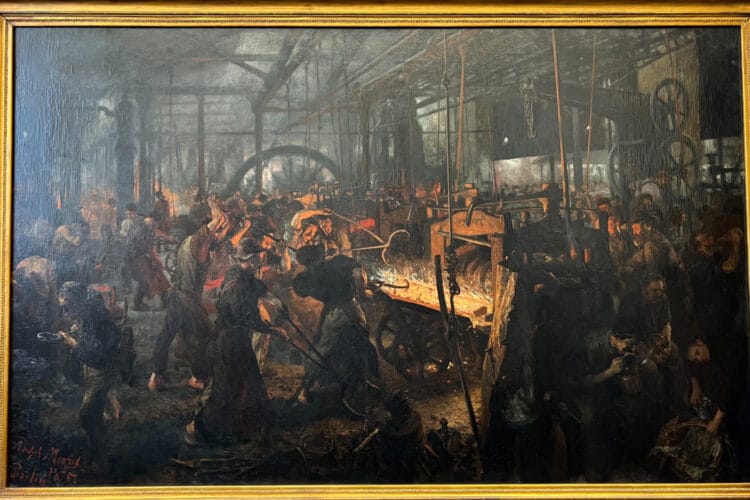
However, the best-known paintings on the ground floor are large works by Adolph Menzel. Several cover important moments in Prussian history, including a very famous work of Frederick the Great playing the flute in concert at Sanssouci (“Flötenkonzert Friedrichs des Großen in Sanssouci”). His realistic “Eisenwalzwerk (Moderne Zyklopen)” (Iron Rolling Mill / Modern Cyclops) is artistically probably higher rated today.


Franz Krüger’s “Parade auf dem Opernplatz in Berlin” was a commission by Czar Nikolai I in the 1820s. It includes accurate portraits of several Berlin artists from the period.
Where to See European Art in Berlin State Museums
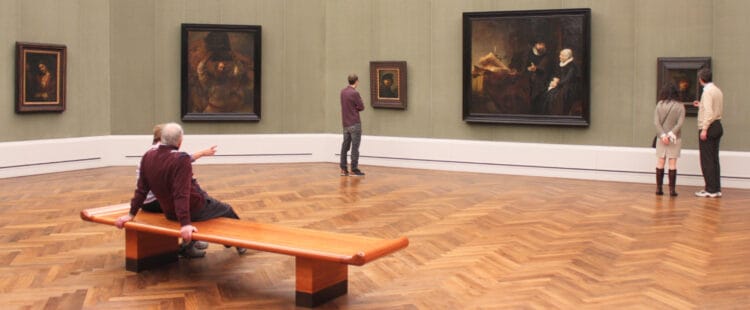
The basic division of the massive, mostly European art collection of the Staatliche Museen zu Berlin is currently as follows:
| Collections | Museum | Highlights |
|---|---|---|
| Paintings (Middle Ages to 18th century, especially German, Dutch, Flemish, Italian) | Gemäldegalerie (Kulturforum) | Amor Triumphant by Caravaggio, The Wine Glass by Vermeer Works by Rembrandt (16), Cranach (22), Dürer (7), Van Eyck (3) |
| Sculpture Collection (Middle Ages to 18th century) | Bode Museum (Museum Island) | Riemenschneider woodcarvings, Gothic altars, Italian sculptures (incl. Donatello), Byzantine art |
| National Gallery (19th-century art) | Alte Nationalgalerie (Museum Island) | Monk by the Sea and Abbey Among Oak Trees (Caspar David Friedrich), Im Wintergarten (Manet), Rodin sculptures. |
| National Gallery (19th-century sculptures) | Friedrichswerdersche Kirche | Prussian Princesses (Schadow) |
| National Gallery (20th-century art) | Neue Nationalgalerie (Kulturforum) | Gerhardt Richter, Major temporary exhibitions |
| National Gallery (20th-century art) | Berlin Modern (Kulturforum) | Due to open in the early 2030s |
| National Gallery Berlin Contemporary | Hamburger Bahnhof | Joseph Beuys, Major temporary exhibitions |
- See also Berlin State Museum Collections Explained: What is Seen Where? for a fuller guide to Berlin’s vast museum exhibitions and magnificent art galleries.
Alte Nationalgalerie Visitor Information
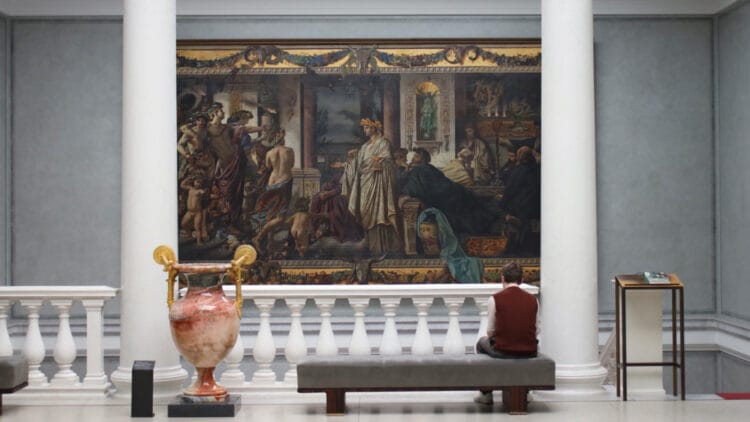
Opening Hours of the Alte Nationalgalerie
The Alte Nationalgalerie on Berlin’s Museum Island is open Tuesday to Sunday from 10:00 to 18:00. Longer opening hours are sometimes possible during major special exhibitions.
As with most museums, the best times to visit are early morning or late afternoon. However, the Alte Nationalgalerie is generally far less crowded than the Pergamon or Neues Museum, making the gallery a sound choice in the middle of the day too. (Except when blockbuster temporary exhibitions require time-slot reservation tickets.)
The Alte Nationalgalerie is open on most holidays, including Mondays if a holiday, but closed on December 24 and 31.
Tickets for the Alte Nationalgalerie

Tickets for the Alte Nationalgalerie are €14, or €16-20 for special exhibitions. Admission is free for children under 18.
For most visitors, buying a ticket online is the easiest option and avoids ticket office queues. If planning to visit another venue on the same day, a Museum Island day ticket or three-day passes offer better value.
During major temporary exhibitions, time-slot reservations may be essential, and a surcharge of around €6 is added to all tickets and passes. A special Express Ticket (€35!) gives immediate admission irrespective of normal capacity limits.
Berlin Museum Passes and Combination Tickets
Many visitors to Berlin find good value in combination tickets:
- The Museum Island Day Ticket is €24 and gives unlimited admission on the same day to the Alte Nationalgalerie, Altes Museum, Bode Museum, Neues Museum, and Pergamon Das Panorama.
- The Museum Pass Berlin is a bargain at €32 for admission to 30 top Berlin museums on three consecutive days.
- The Alte Nationalgalerie is included in the Berlin Welcome Card + Museum Island.
- An annual pass (Jahreskarte) for all the Staatlichen Museen Berlin is as cheap as €25 (limited hours but multiple entries possible).
With all these options, it is possible to go directly to the museum entrance (but remember to pick up free audio guides first).
Transportation to the Alte Nationalgalerie
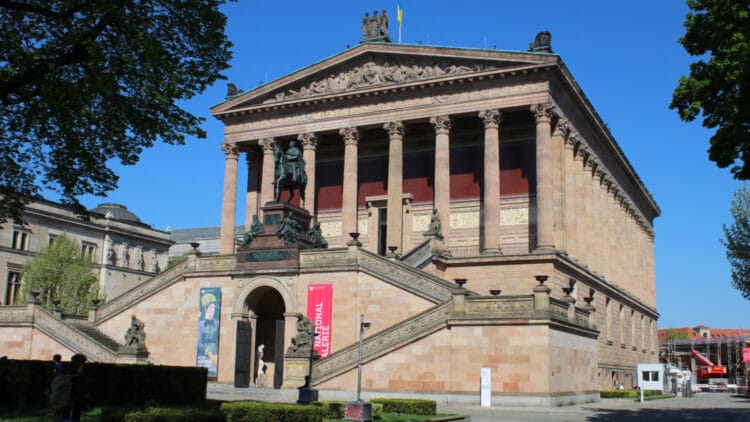
The Alte Nationalgalerie is an imposing building resembling a Greek temple on Museum Island in the heart of Berlin. The entrance is in Bode Straße – somewhat disappointingly under rather than via the grand external staircase.
The most convenient public transportation is the U-Bahn (U5 metro stop Museumsinsel) or buses 100 and 300 stopping at U Museumsinsel (previously, Lustgarten).
Trams M1 and M12 (Kupfergraben) are also convenient. It is a short walk to Museumsinsel from the endless public transportation options to either Friedrichstraße or Hackescher Markt stations.
More on the Berlin State Museums (Staatliche Museen zu Berlin):
Berlin State Museum Basics:
- Top National Museums and Galleries (brief overview)
- Berlin State Museums: What Is Seen Where?
- Opening Hours (2026)
- News & Special Exhibitions
- Ticket Prices (Buy online from GetYourGuide or SMB)
- Save with the Berlin Museum Pass & Berlin Welcome Cards
- Staatliche Museen zu Berlin (official website in German & English)