Visit the Altes Museum in Berlin to see Germany’s finest collections of Greek, Etruscan, and Roman antiquities, including famous sculptures, ancient jewelry, and the largest Etruscan collection outside Italy.

The Altes Museum on Museumsinsel in the heart of Berlin displays high art from classical antiquity. The main reason to visit is to see the magnificent Greek art collection that includes sculptures, vases, pottery, monuments, decorative items, and jewelry. A further highlight is the Etruscan collection, considered the largest outside Italy. The Roman sculptures are often copies of Greek originals, while the funerary monuments are particularly impressive. The Altes Museum has a notable ancient erotica collection. Buy skip-the-line tickets online, or a Museum Island day ticket, and proceed directly to the gallery entry door.
Altes Museum in Berlin: Quick Guide
📍 Location: Museum Island (Museumsinsel), Berlin
⭐ Don’t Miss:
- Berlin Goddess
- Praying Boy
- Etruscan collection
- Hildesheim silver find
- Rotunda
⏱ Time Needed:
Around an hour
🎟 Best Ticket:
Museum Island Day Ticket if visiting more than one museum
📅 Best Time to Visit:
Weekdays at 10:00 or after 15:00
👨👩👧👦 Good For:
Classical Greek, Etruscan, and Roman antiquities
Why Visit? Berlin’s best museum for Greek antiquities and one of Europe’s strongest Etruscan collections.
Jump to:
Greek · Etruscan · Roman · Erotica · Hours · Tickets
Visit the Exhibitions in the Altes Museum in Berlin
The Altes Museum on Museum Island in Berlin is home to part of the Collection of Classical Antiquities of the Staatliche Museen zu Berlin (SMB). Items on display here include Greek, Etruscan, and Roman art from around 1000 BC to AD 300.
The antiquities in the Altes Museum are mostly sculptures, vases, objects used in daily life, jewelry, and coins. Further items from the Antikensammlung are on display in the Pergamon Museum (reopens 4 June 2027), Pergamon Das Panorama, and the Neues Museum.
The Altes Museum is smaller and generally less visited than the Neues Museum or the Pergamon. It is rarely crowded — early-morning and late-afternoon visits are more pleasant, but timing is less critical here. Visitors generally spend an hour in the Altes Museum; staying more than two hours is rare. It is easy to combine with another Museum Island museum on the same day ticket.
Greek Art in the Altes Museum in Berlin

The main floor of the Altes Museum in Berlin displays Greek art. The exhibitions in the twelve halls start with the heroes of early Greece (from 1000 BC onwards) and follow a variety of themes until the Romans became the dominant force in southern Europe during the first century BC.
Major themes are, as could be expected, Greek gods and heroes, the symposium and athletics, life and death, coins, and jewelry.
Some of the impressive number of statues are in a very well-preserved condition. Others were restored, often centuries ago, in a way that would not occur currently. In some cases, alterations were already made in antiquity, or heads and bodies might be from the same period but only united much later.
Greek Pottery and Stoneware in the Altes Museum


The large collection of vases and decorated pottery covers all themes and eras. Popular decorations include Greek sagas and myths, e.g., the labors of Heracles, scenes from the Iliad and the Odyssey, or preparations for athletic events.
Two artistic highlights from circa 500 BC are:
- The portrayal of Achilles dressing the wounds of Patroclus in a kylix signed by the potter Sosias. It shows the two Greek heroes in a very unheroic and humanist pose.
- An amphora of Satyrs with musical instruments and Hermes on the way to a symposium by the “Berlin Painter”.
With so many complete, if repaired or restored, vases available, it is worth paying particular attention to the odd solo fragments. For example, on one fragment, warriors emerge from the wooden horse in Troy.
Coins and Jewels in the Altes Museum
It is easy to miss the coin collection (room 4) and the ancient jewelry collection (room 8), both in smaller rooms off the main visitor route. (More are also in the main display halls.)
The Münzkabinett (numismatic collection, or more descriptively, the coin cabinet) owns over half a million coins, including 102,000 from Greek antiquity and 50,000 Roman — only around 1,400 are displayed in the Altes Museum (many more in the Bode Museum).
Tip: Even with no interest in coins, enter to see the blue ceiling. It is the only room in the museum where the original Schinkel ceiling was restored and serves as inspiration for the blue starry-sky platform ceiling painting at U5 Museumsinsel station.
Greek Antiquity Highlights in the Altes Museum in Berlin
Some of the highlights in the Hellenic section of the Altes Museum include:


Berliner Göttin — the so-called Berlin Goddess has been downgraded in modern times to a funeral statue of a woman for a rich family’s grave. This marble sculpture from Keratea (Attica in Greece) dates from 580 – 560 BC and is famous for its magnificent red garment.
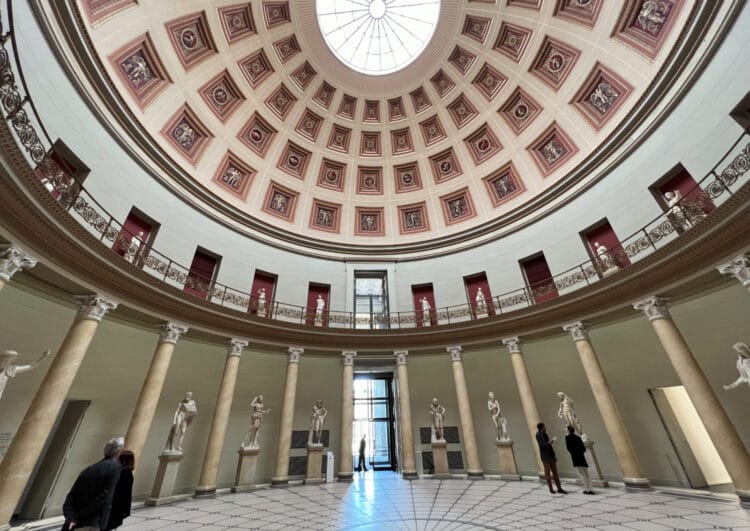
Rotunde — the rotunda was an absolute architectural highlight of the museum when it opened. It was obviously inspired by the Pantheon in Rome and is the only part of the interior of the building rebuilt similar to the original when the museum was reconstructed in the mid-1960s. The sculptures between the 20 Corinthian columns were mostly heavily restored. Information sheets explain the portrayals and restorations.


Betender Knabe / Praying Boy — this Greek bronze nude is one of the most popular works in the Altes Museum. The arms are new, but the rest of the statue of a naked young man dates from around 300 BC from Rhodes (Greece). He welcomes visitors entering from the rotunda in the position Schinkel originally planned for him when the museum was designed almost two centuries ago.

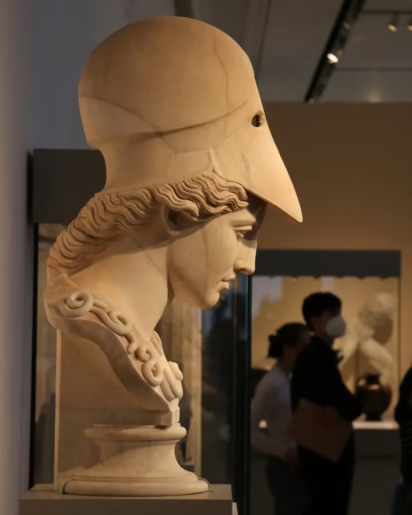
Although most of the sculptures are male, as women played a very subdued role in Greek public society, several highlights portray women and female goddesses. The Goddess of Taranto on her throne, Magna Graecia, 475–450 BC, is exceptionally well preserved despite missing both hands. The displayed Wounded Amazon still has both breasts on this Roman copy of a lost Greek original by Polykleitos (ca. 430 BC).
Etruscan Art in the Altes Museum in Berlin

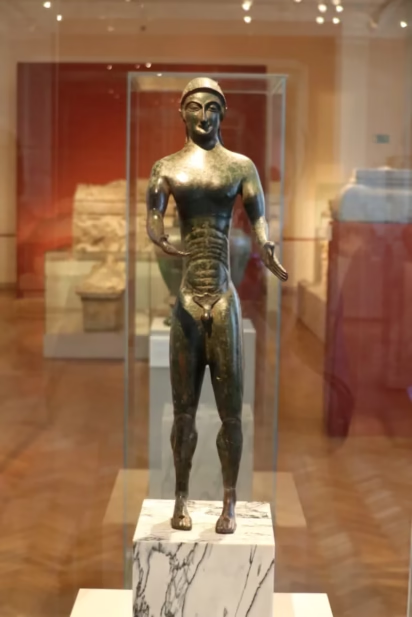
The upper floor of the Altes Museum displays Etruscan and Roman art. The Etruscan collection, one of the largest outside Italy, is particularly praised. It includes sculptures, pottery, jewelry, mirrors, and architectural details.
The prominently displayed statuette of an Etruscan warrior (cast bronze, 5th century BC) and a figurine of a naked youth (bronze, around 500 BC) are quite different in style from the Greek works on the main floor.
Roman Art in the Altes Museum in Berlin
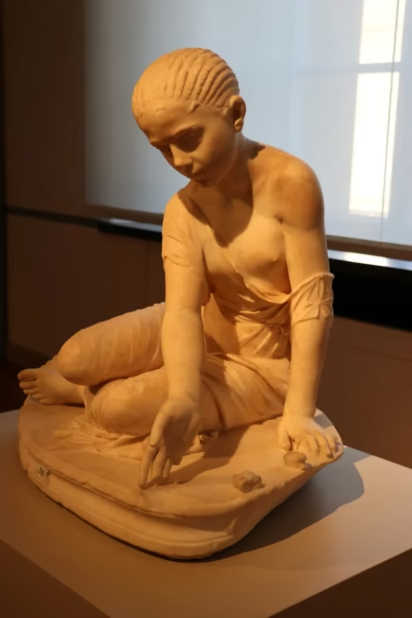


Roman themes in the Altes Museum in Berlin include life and death, with several sarcophagi and a large collection and variety of funeral monuments and sculptures. The Girl Playing Astragaloi (around 150 AD, head 200 AD, Knöchelspielerin) is an adaptation of a popular Hellenistic model. The knucklebone (astragalus) game, a popular theme on funeral monuments, was added by the Romans. Some of the sad-faced child busts are particularly moving — the Romans certainly did funerals and death memorials well.

The audio guide reveals the whole sorry saga portrayed on the Medea Sarcophagus — a complete tragedy with love, jealousy, betrayal, conspiracy, several murders most foul, and revenge depicted on a single sarcophagus side in Rome (marble, 140 – 150 AD).
Roman Sculptures in the Greek Style

Many of the Roman sculptures are copies or adaptations of older Greek works. Many of the sculptures on display were repaired or altered throughout the centuries — sometimes already in antiquity, but often too in the 18th and 19th centuries, when sculptures were commonly repaired and altered in a way works from antiquity generally would not be restored by major museums today.
Already in late antiquity, male genitals were knocked off to reuse sculptures in the more restrictive Christian milieu, or new heads were added to existing sculptures.


As with the Berlin Goddess, the Statue of a Boy — Possibly of Apollo has been reevaluated in modern times. Its descriptions changed from a highly valued Greek bronze from 400 BC to a still impressive but more mainstream Roman bronze from around 20 BC.
Repairing sculptures from antiquity was a good earner for sculptors in the 18th and 19th centuries. See, for example, Hermes restored by Emil Wolff in 1824 and now displayed in the Friedrichswerdersche Kirche (included in a Museum Island day ticket).
Luxury Lifestyles of the Roman Elite
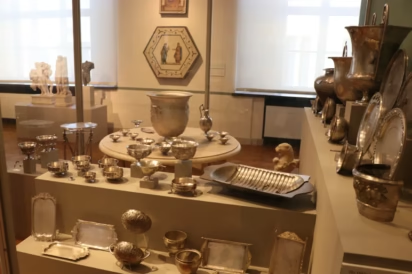
Luxuries from the Roman villa illustrate the lives of the upper classes. In addition to the usual collection of utensils, home decorations, mosaics, and smaller sculptures, this section also includes the huge Hildesheimer Silberschatz.
This silver treasure was discovered in 1868 in Hildesheim in Lower Saxony. The find consisted of 70 silver and partly gold-gilt Roman serving dishes and is one of the largest and highest quality treasures from antiquity ever found.
How the silver came to Hildesheim, which was far from Roman-occupied Germany, remains a mystery. Surprisingly, one of the best Ancient Egyptian collections in Germany is in Hildesheim. The Roemer-Pelizaeus Museum has one of the four best collections in the world on the Old Kingdom. To add to the intrigue, Roemer here refers to one of the museum founders, not the standard German word for Romans. Hildesheim (near Hannover) is more famous for its UNESCO-listed Romanesque churches and large half-timbered buildings.
The main exhibition concludes with a large collection of busts of the Roman elite, especially emperors and Julio-Claudian princes. Several statues of Antinous, Emperor Hadrian’s young beloved, are on display in the museum. His depiction with short curly hair became the preferred style for youth portraits of the imperial family from Marcus Aurelius to Caracalla.
Roman and Greek Erotica in the Altes Museum in Berlin

Off hall 5 is the smaller Garden of Delights (room 6) dedicated to the art of love in antiquity (erotica, or smut if the items were not that old, although the artistic quality of several items is very high). This display includes a lot of male genitalia — a symbol of fertility and a protector against all kinds of evil in many regions — used in the shape of bells, charms, and oil lamps.

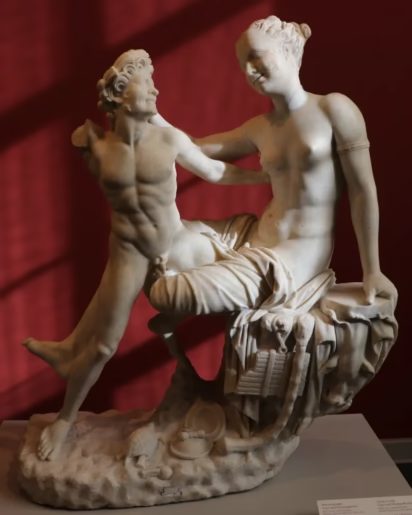
Many of the depictions are of characters such as satyrs and maenads associated with the Greek / Roman gods of love and sexuality: Aphrodite / Venus and Dionysus / Bacchus. Even in more mainstream art and especially sculptures, satyrs are often allowed sexual behavior not acceptable in the portrayal of mere human mortals.
Some of the works with the highest artistic merit even made it into the main exhibitions of the museum itself. In the main Greek display is a vase with a satyr becoming sexually aroused as a result of playing the double flute aulos. The display on the symposium also has the crude, if highly artistic, portrayal of a man vomiting after a good night out, and the prostitute Hetaera urinating.
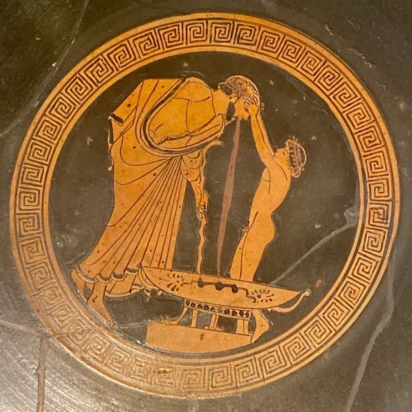
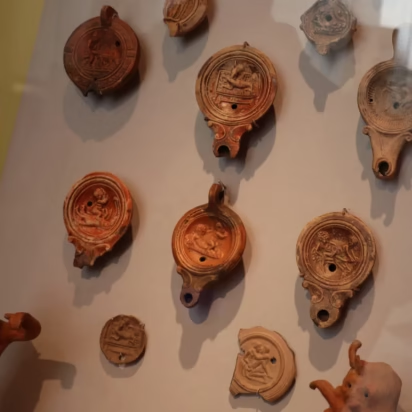
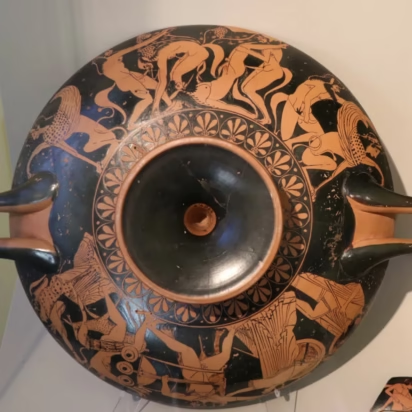
While studying the erotic art, note the museum description: “However, to make deductions from the image to the respective use would be missing the point… As far as the various positions of making love on the round fields are concerned, it has to remain open if they really reflect literary treatises on the subject.”
→ More photos at Erotica in the Altes Museum in Berlin.
The National Museum of Archaeology in Naples also has a very famous Secret Room (Gabinetto Segreto) of erotica from antiquity, while the most famous work from antiquity in Germany is arguably the manspreading Barberini Faun (Drunken Satyr) in the magnificent Glyptothek in Munich.
Where Are Antiquities Exhibited in Berlin
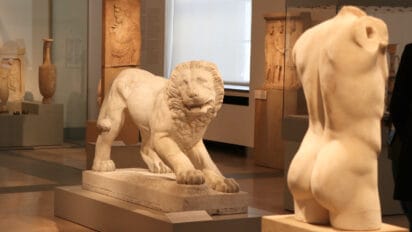
To see Berlin’s popular Antikensammlung (Collection of Antiquities), you’re best off buying a Museum Insel ticket or more.
This impressive collection is spread through three museums: the Altes Museum, Neues Museum, and Pergamon Museum. Further temporary exhibitions are in the James Simon Gallery.
What antiquities are seen in which Berlin Museum? The answer is not that easy, but use the following as a rough guide:
- Archaeological finds from the Stone Age to the Middle Ages and items from the Roman provinces are in the Neues Museum (together with the large Egyptian collection).
- The bigger, the more likely it is in the Pergamon Museum.
- The more classical the civilization, the more likely you’ll see it in the Altes Museum. (Classic Greek, Etruscan, Roman sculptures and pottery.)
- See also Berlin State Museum Collections Explained: What is Seen Where? for a fuller guide to Berlin’s vast museum exhibitions and magnificent art galleries.
Altes Museum in Berlin Visitor Information

The Altes Museum is on Museum Island in central Berlin and is easy to combine with the Neues Museum, Bode Museum, or Alte Nationalgalerie on the same day.
Opening Hours of the Altes Museum in Berlin
The opening hours of the Altes Museum in Berlin are Tuesday to Friday from 10:00 to 17:00 and Saturday and Sunday from 10:00 to 18:00.
Buying Tickets for the Altes Museum

Admission tickets for the Altes Museum are €12. Admission is free for under-18-year-olds. Time-slot reservations are not currently possible. (Free Sundays no longer apply.)
For most visitors, buying a ticket online is the easiest option and avoids ticket office queues. If planning to visit another venue on the same day, a Museum Island day ticket or three-day passes offer better value.
Visitors using the excellent value Berlin Museum Pass, a Museum Island Ticket, or a Berlin Welcome Card Museum Island may also enter the Alte Museum directly.
Audio guides in English (or German) are free — pick up near the ticket desk before entering the museum. The audio guide is well worth using — although descriptions in the museum are in German and English, the guide explains some of the major works in more detail.
Location of the Altes Museum in Berlin
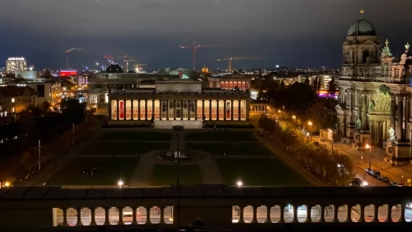
The Neo-Classical Altes Museum, designed by Karl Friedrich Schinkel and opened in 1830, is on Berlin’s Museumsinsel, closing off the northern end of the former Lustgarten (pleasure garden) with the Berliner Dom (cathedral) on the eastern end and the Berliner Schloss (Humboldt Forum) on the south.
The entrance to the Altes Museum is up the stairs and via the main front with its 18 Ionic columns. Wheelchair access is via a door on the eastern wing — nearer to the Alte Nationalgalerie.
The most convenient U-Bahn stop is U-5 Museumsinsel. Buses 100 and 300 also stop here at the U Museumsinsel stop (previously, Lustgarten).
More on the Berlin State Museums (Staatliche Museen zu Berlin):
Berlin State Museum Basics:
- Top National Museums and Galleries (brief overview)
- Berlin State Museums: What Is Seen Where?
- Opening Hours (2026)
- News & Special Exhibitions
- Ticket Prices (Buy online from GetYourGuide or SMB)
- Save with the Berlin Museum Pass & Berlin Welcome Cards
- Staatliche Museen zu Berlin (official website in German & English)